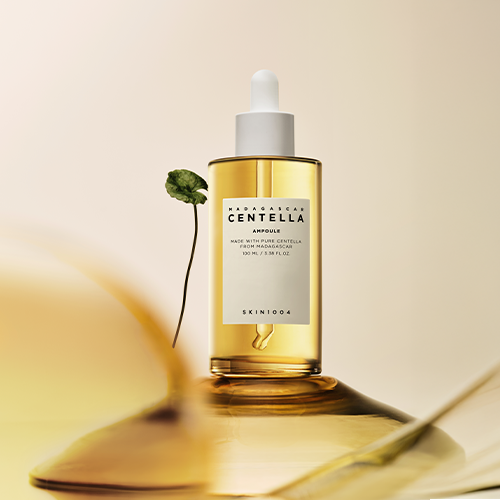
Best Korean Serums 2026
Best Korean Serums 2026: complete buyer's guide with picks for every skin type, ingredient breakdown, and routine tips.

Related Articles
Ingredient GuidesVitamin C + Tranexamic Acid: Korean Hyperpigmentation Supplements
More ArticlesAre Korean Skincare Products Safe? Clean Ingredients GuideAzelaic Acid in Korean Skincare: For Hyperpigmentation and AcneBest Korean Serums 2026Centella Asiatica in Korean Skincare: What It DoesCeramides in Korean Skincare: Benefits and Best ProductsDo Korean Skincare Devices Actually WorkGlass Skin Routine: The Complete Step-by-Step GuideHow Long Does Korean Skincare Take to Show ResultsKorean Skincare Routine GuideThe 10-Step Korean Skincare Routine Explained
Best Korean Serums 2026: complete buyer's guide with picks for every skin type, ingredient breakdown, and routine tips.
Quick Answer: The full Korean skincare routine has 10 steps grouped into 4 phases: cleanse, prep, treat, and protect Beginners should start with 4 steps only: oil cleanser, serum, moisturizer, and SPF 50+ sunscreen Double cleansing (oil then water-based) is the foundation—skipping the oil step leaves SPF and sebum trapped in pores Sheet masks work … Read more
![[CELIMAX] The Vita-A Retinal Shot Tightening Booster - Korean Beauty, Skincare, Cosmetics, Makeup](https://kbeautycontent.com/wp-content/uploads/2026/06/857b9f52-5104-44e0-8077-34a97edcc463.jpg)
Quick Answer: The 10-step routine layers products from thinnest to thickest: oil cleanse → water cleanse → exfoliate → tone → essence → serum → sheet mask → eye cream → moisturizer → sunscreen (AM only) Expect to spend 15–30 minutes; heavy makeup removal requires the full half-hour to prevent clogged pores and premature aging … Read more
![[the SKIN HOUSE] Ultra Collagen Steam Cream 50ml](https://kbeautycontent.com/wp-content/uploads/2026/06/General_-the-SKIN-HOUSE-Ultra-Collagen-Steam-Cream-50ml.jpg)
Glass Skin Routine: The Complete Step-by-Step Guide: complete buyer's guide with picks for every skin type, ingredient breakdown, and routine tips.
Quick Answer: Start with 5 steps only: oil cleanser, water-based cleanser, hydrating toner/essence, moisturizer, and SPF (morning). This covers the foundation without the overwhelm. Double cleanse every evening: Remove makeup/sunscreen with an oil cleanser, then wash with a gentle water-based cleanser. This is non-negotiable for clear pores. Hydration is the star: Look for ingredients like … Read more
Quick Answer: Yes — Korean skincare products are generally safer than US or EU alternatives because Korea bans over 1,000 ingredients (US bans just 11). The Ministry of Food and Drug Safety (MFDS) enforces strict limits on heavy metals, microbes, and preservatives like parabens and formaldehyde. Brands like Amorepacific Corporation (owner of Laneige and Sulwhasoo) … Read more
![[Anua] Azelaic Acid Hyaluron Redness Soothing Serum Mask 23ml (1ea)](https://kbeautycontent.com/wp-content/uploads/2026/06/Anua_-Anua-Azelaic-Acid-Hyaluron-Redness-Soothing-Serum-Mask-23ml-1ea.jpg)
Quick Answer: Azelaic acid is a grain-derived dicarboxylic acid (from wheat, rye, barley) that inhibits tyrosinase to fade dark spots and reduces inflammation for rosacea-prone skin 10% concentrations tackle hyperpigmentation and post-acne marks, while 20% formulas target active acne and blackheads; sensitive skin should start at 5% Korean formulations prioritize watery, fast-absorbing textures layered with … Read more
![[SKIN1004] Centella Air-fit Suncream Light - Korean Beauty, Skincare, Cosmetics, Makeup, Sunscreen](https://kbeautycontent.com/wp-content/uploads/2026/06/02ddb2af-d291-432f-94f8-e7fd074ffceb-1.jpg)
Quick Answer: Centella asiatica (called “cica” in K-beauty) is a medicinal herb with four active compounds that reduce redness and repair damaged skin barriers Clinical studies show asiaticoside-rich formulas heal wounds faster than commercial creams, making it ideal for acne-prone and sensitive skin You’ll find it in everything from toners to sleeping masks—safe for daily … Read more
Quick Answer: Ceramides are natural lipids that make up about 50% of your skin barrier – they act like the “mortar” between skin cells, locking in moisture and keeping irritants out. They repair damage fast: Clinical studies show consistent topical use restores barrier function within days, especially when combined with hydrators like hyaluronic acid, panthenol, … Read more
Quick Answer: Yes, but mostly as delivery amplifiers for proven ingredients like hyaluronic acid, snail mucin, and glycerol — not as standalone miracles. LED masks have the strongest evidence (similar to low-dose retinol), while microcurrent offers temporary lifts that complement niacinamide and peptides. The biggest content gap? Most reviews miss that brands like Amorepacific Corporation … Read more