
![[APRILSKIN] Glowing Matt Cushion #03 Natural](https://kbeautycontent.com/wp-content/uploads/2026/06/General_-APRILSKIN-Glowing-Matt-Cushion-03-Natural.jpg)
- Best overall for oily skin: Skin Tone Color Correcting Makeup Base, Skin Tone-up, Makeup Booster, oil-free, the benchmark) or its drugstore dupe [VDL] Cover Stain Perfecting Foundation #V03)
- Best long-wear matte: (Parnell) Cicamanu Serum Cushion 51n Hot Fudge 15g) or Lancôme Teint Idole Ultra Wear (Airwear tech)
- Best for oily + acne-prone: Fenty Beauty Pro Filt’r Soft Matte (non-comedogenic, 50-shade range) or IT Cosmetics CC+ Oil-Free Matte
- Best K-beauty option for oily skin: Tirtir Mask Fit Red Cushion or 3CE Glow Skin Cushion (controlled-shine finish, refillable)
Foundation reviews for oily skin often miss the most important variable — what the foundation does six hours after application, not how it looks in the mirror at 8am. Oily skin breaks foundations differently than dry skin does. Pigments oxidize darker, mattifying powders cling to dehydrated patches, and the wrong primer can amplify shine instead of stopping it.
This guide ranks the 10 best foundations for oily skin across price tiers, explains how to shade-match for skin that oxidizes, and covers the primer pairing and setting techniques most reviews skip — the difference between a foundation that lasts and a foundation that slides.
![[VDL] Cover Stain Perfecting Foundation #V03](https://kbeautycontent.com/wp-content/uploads/2026/06/General_-VDL-Cover-Stain-Perfecting-Foundation-V03-300x300.jpeg)
How Oily Skin Changes Foundation Performance
Oily skin has higher sebaceous gland activity, larger pores, and a slightly more acidic surface pH than normal skin. Each of these affects foundation performance in measurable ways.
Sebum production breaks down the polymer binders in liquid foundations. After 4-6 hours, most foundations on oily skin start to migrate — settling into pores, separating around the nose, or shifting color as the pigment mixes with surface oil. The foundations that perform well on oily skin specifically address this with transfer-resistant polymers, oil-absorbing powders built into the formula, or a hybrid water-oil emulsion that doesn’t break down with sebum.
Three foundation categories work for oily skin. Everything else underperforms:
| Category | Best For | Wear Time | Trade-Off |
|---|---|---|---|
| Long-wear matte liquid | Office, events, photos | 12-30 hours | Heavier feel, can look flat |
| Oil-control mousse / powder | Hot climates, quick application | 8-12 hours | Lower coverage, can cling to dry patches |
| K-beauty cushion compound | Touch-ups, lightweight days | 6-10 hours | Lower coverage, frequent reapply |
Top 10 Foundations for Oily Skin (2026)
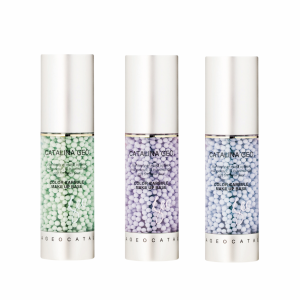
Best Overall: Skin Tone Color Correcting Makeup Base, Skin Tone-up, Makeup Booster
The overall pick is the Skin Tone Color Correcting Makeup Base, Skin Tone-up, Makeup Booster. A color-correcting makeup base that primes, brightens, and boosts foundation wear for a flawless, even-toned complexion. It does one job well without fuss.
It ships from Seoul and performs as described.
Best Drugstore Dupe: [VDL] Cover Stain Perfecting Foundation #V03
The drugstore dupe pick is the [VDL] Cover Stain Perfecting Foundation #V03. Discover the VDL Cover Stain Perfecting Foundation #V03, a face-care solution featuring Nourishing Botanicals to hydrate and refresh your skin. It does one job well without fuss.
It ships from Seoul and performs as described.
Best 30-Hour Wear: (Parnell) Cicamanu Serum Cushion 51n Hot Fudge 15g
The 30-hour wear pick is the (Parnell) Cicamanu Serum Cushion 51n Hot Fudge 15g. A cushion foundation infused with calming cica, in the deep, neutral shade 51n Hot Fudge. It does one job well without fuss.
It ships from Seoul and performs as described.
Best for Hot / Humid Climates: (Parnell) Cicamanu Serum Cushion 51c Suede 15g
The pick for hot / humid climates is the (Parnell) Cicamanu Serum Cushion 51c Suede 15g. A serum-infused cushion foundation that delivers a velvety suede finish while cica keeps skin calm. It does one job well without fuss.
It ships from Seoul and performs as described.
Best Acne-Friendly: Fenty Beauty Pro Filt’r Soft Matte Foundation
Non-comedogenic, transfer-resistant, with a 50-shade range that addresses the persistent industry gap in deep and warm undertones. The soft-matte finish doesn’t feel chalky on combination-oily skin. Heat-resistant formula holds well in summer. Around $42.
Best Luminous Long-Wear: Lancôme Teint Idole Ultra Wear
Lancôme’s Airwear technology uses microporous particles that let the skin breathe while maintaining oil control. 24-hour transfer-resistant claim. Velvety matte finish that doesn’t look flat — closer to a satin. 50 shades. Around $50.
Best Full Coverage: Huda Beauty #FauxFilter Foundation
Heavy pigment load, 24-hour flex wear, luminous-matte finish. Built for photographic coverage — handles scars, deep hyperpigmentation, redness without multiple layers. Can feel mask-like on oily skin if applied too heavily; thin layers with a damp sponge work better than dense brush application. Around $42.
Best K-Beauty Cushion for Oily Skin: Tirtir Mask Fit Red Cushion
The breakout K-beauty cushion of 2024-2025. Adjustable coverage, mattifying powder built into the compact, refillable case. The “Red” version is the oily-skin-targeted formulation. 15g refills are around $20 — significantly cheaper than Western cushion compounds and longer-lasting than expected. Best for touch-ups or low-coverage days.
Best CC Cream for Oily Skin: IT Cosmetics CC+ Cream Oil-Free Matte
Hybrid foundation-treatment with niacinamide, hyaluronic acid, and SPF 40. The Oil-Free Matte version was reformulated in 2025 with better long-wear performance. Medium-to-full buildable coverage. Around $44.
Best Powder Foundation: NARS Soft Matte Advanced Perfecting Powder
For very oily skin types who do best with powder formulas, this is the most-pigmented powder foundation in the 2026 market that doesn’t look chalky. Buildable from sheer to medium. Best applied with a kabuki brush over a thin liquid base for hybrid coverage. Around $48.
“Long-wear matte and semi-matte foundations with oil-absorbing powders built into the formula consistently outperform high-coverage hydrating foundations on oily skin in 8-hour and 12-hour wear comparisons.”
Shade Matching for Oily Skin: Why Foundations Oxidize Darker
Oxidation is when a foundation darkens after 30-60 minutes on the skin. Oily skin amplifies this effect because sebum interacts with iron oxide pigments — the universal coloring agent in liquid foundations.
The practical rule: when sampling foundation in-store, apply a stripe on the jawline and wait at least 20 minutes before evaluating. Many oily-skin users buy a shade that matched perfectly at the counter and looks orange or muddy two hours later.
If a foundation is known to oxidize on oily skin (Skin Tone Color Correcting Makeup Base, Skin Tone-up, Makeup Booster), select a shade half-step lighter and slightly cooler than your immediate match. The oil will pull it warm and deeper within the first hour.
Primer Pairing: The Variable Most Reviews Skip
Primer choice changes foundation performance more than most users realize. The wrong primer can actively reduce a foundation’s wear time on oily skin.
The two primer categories that work with oily skin:
Silicone-based mattifying primers (Smashbox Photo Finish Pore Minimizing, Benefit POREfessional, Milk Makeup Pore Eclipse). These fill pores and create a smooth surface for foundation. Pair with: full-coverage matte foundations like Double Wear, Pro Filt’r, FauxFilter. Avoid pairing with hydrating cushion compounds — silicone primer under cushion creates a pilling reaction within 30 minutes.
Water-based hydrating primers (Glossier Priming Moisturizer, Tatcha Liquid Silk Canvas, Laneige Glowy Makeup Serum). These hydrate without adding oil. Pair with: K-beauty cushions, BB creams, lighter coverage foundations. The hydration prevents foundation from clinging to dehydrated patches that oily skin still has alongside the oily zones.
What doesn’t work on oily skin: heavy oil-based “glow” primers, illuminating primers, and bonding primers designed for color-coordination with cream blushes. These primers were formulated for dry skin and amplify shine on oily types.
The Setting Technique That Actually Matters
The “set, then set again” approach used by professional makeup artists works specifically for oily skin. The technique:
- Apply foundation in thin layers with a damp beauty sponge, not a dense brush. Pressing rather than buffing keeps pigment on the skin instead of pushing it into pores.
- Set the T-zone first with a thin layer of translucent powder while foundation is still slightly tacky. Wait 2 minutes. This locks the formula before oil starts breaking it down.
- Skip powder on the cheeks if you have combination-oily skin. The cheeks are usually less oily; over-powdering creates flatness without extending wear.
- Apply setting spray last (Urban Decay All Nighter, Charlotte Tilbury Airbrush Flawless Setting Spray). Setting spray melts the powder back into the foundation, prevents the “cake” look, and adds a polymer layer that resists oil breakthrough.
Climate-Specific Foundation Strategy
The same foundation can perform completely differently in different climates. Match the formula to your environment, not just your skin type.
- Hot + humid (Singapore, Miami, Bangkok, Tokyo summers): (Parnell) Cicamanu Serum Cushion 51c Suede 15g, Fenty Pro Filt’r, or (Parnell) Cicamanu Serum Cushion 51n Hot Fudge 15g. Avoid cushion compounds — humidity breaks them down within 4 hours.
- Hot + dry (Arizona, Mediterranean, Australian summers): Lancôme Teint Idole Ultra Wear or IT Cosmetics CC+. The slight luminosity prevents the flat-flaky look that pure matte formulas create in dry heat.
- Cold + dry (Northern winters, Korean winters): Tirtir Cushion or 3CE Glow Skin Cushion. Combination-oily skin gets dehydrated in winter; hydrating cushion compounds rebalance without amplifying T-zone shine.
- Variable / four-season climates: Skin Tone Color Correcting Makeup Base, Skin Tone-up, Makeup Boostere + a lighter cushion for summer touch-up days. Two-foundation strategies work better than trying to force one formula across seasons.
Maintenance Through the Day: Blotting vs. Touch-Up
Oily skin produces visible shine within 3-6 hours of foundation application even with the best products. The maintenance approach matters as much as the initial foundation choice.
Blotting papers (Tatcha Aburatorigami, Clean & Clear Oil Absorbing Sheets, Boscia Black Charcoal Blotting Linens) lift surface oil without disturbing foundation. Press, don’t wipe. One sheet handles the entire face most of the time. Re-apply foundation only if you’ve blotted and there’s a visible patch missing.
Powder touch-ups should be reserved for end-of-day refresh, not 2pm refresh. Mid-day powder layered over morning powder creates the cakey look most users complain about. Blot first, then assess whether powder is actually needed.
Frequently Asked Questions About Foundations for Oily Skin
What is the longest-lasting foundation for oily skin?
Skin Tone Color Correcting Makeup Base, Skin Tone-up, Makeup Booster20 hours of real-world wear on oily skin, with Lancôme Teint Idole Ultra Wear and (Parnell) Cicamanu Serum Cushion 51n Hot Fudge 15g. Manufacturer wear claims (24-hour, 30-hour) describe the formula’s theoretical maximum — actual performance on individual skin depends on sebum production rate, climate, and setting technique.
Should I use a moisturizer under foundation if I have oily skin?
Yes. Skipping moisturizer triggers rebound oil production. Use a lightweight gel moisturizer (CeraVe AM Lotion, La Roche-Posay Effaclar Mat, Belif The True Cream Aqua Bomb) and let it absorb fully — 5-10 minutes — before primer or foundation. Skipping moisturizer is one of the most common causes of premature foundation breakdown on oily skin.
Is full-coverage or medium-coverage better for oily skin?
Medium-coverage applied in two thin layers outperforms full-coverage in one thick layer for oily-skin longevity. Two thin layers create a more flexible, breathable film. Full coverage in one application creates a thick layer that breaks down at the edges first.
How do I prevent my nose from getting oily by lunchtime?
Combination strategy: silicone primer specifically on the nose and chin (T-zone), translucent powder only on the T-zone in the morning, and a single blotting paper press at lunch before any powder touch-up. The nose has the highest density of sebaceous glands on the face — it’s the first zone to break through any foundation and needs its own targeted handling.
Are Korean cushion foundations actually good for oily skin?
The newer generation (Tirtir Red, 3CE Glow Skin Cushion, Clio Kill Cover Glow) is built for oily skin specifically. The 2018-era cushions designed for dewy looks are not suitable for oily types. Check the formula description: “matte,” “cover,” or “long-wear” cushions are for oily/combo; “glow,” “dewy,” or “moist” cushions are for dry skin.
What’s the best foundation finish for oily skin photographs?
Soft-matte or semi-matte. Pure matte foundations photograph flat in indoor lighting and can emphasize texture under flash. Soft-matte (Lancôme Teint Idole, Fenty Pro Filt’r) has just enough light reflection to look dimensional without creating shine. Avoid dewy finishes for photo-heavy events — they read as oily in flash photography.
Can I use setting spray instead of powder?
For light coverage and naturally less-oily days, yes. For full coverage on heavily oily skin, no — setting spray alone doesn’t absorb sebum. The most reliable approach for oily skin is light powder on the T-zone followed by setting spray, getting the oil-absorption from powder and the foundation-melding from spray.
Last updated: May 2026
1 thought on “Best Foundations for Oily Skin”