
![[coxir] Black Snail Collagen Toner 150ml](https://kbeautycontent.com/wp-content/uploads/2026/06/General_-coxir-Black-Snail-Collagen-Toner-150ml.jpg)
Quick Answer: Best Korean Toners in 2026
- Best hydrating toner: Anua Heartleaf 77% Soothing Toner — stackable, fast-absorbing, ideal for the 7-skin method
- Best for oily & acne-prone skin: Some By Mi AHA BHA PHA 30 Days Miracle Toner — triple-acid exfoliation without over-stripping
- Best for sensitive skin: Klairs Supple Preparation Unscented Toner — fragrance-free, alcohol-free, minimal irritation risk
- Best for brightening: Goodal Green Tangerine Vita C Dark Spot Toner — stable vitamin C with niacinamide for visible dark spot reduction
Korean toners are not what most people picture when they hear the word “toner.” There are no harsh astringents, no witch hazel stinging your face, no cotton pads turning brown with residue.
A Korean toner stings about as much as a glass of room-temperature water — which is to say, never.
In K-beauty, toners — called skins (스킨) — are your primary hydration delivery tool. Most buying guides list options by skin type and stop there.
But the more useful question isn’t “oily or dry?” — it’s “first toner or second toner?” That functional distinction changes everything: what goes on first, how you layer, and whether you can use the 7-skin method safely.
The picks below are about performance, not the ones that photograph best for Instagram.
This guide covers the 10 best Korean toners available as of 2026, organized by function, plus a pH sequencing guide nearly every other roundup skips entirely.
What Makes Korean Toners Different From Western Toners?
Western toners were historically designed to remove residue and rebalance skin pH after alkaline cleansers. Many contained alcohol or witch hazel — ingredients that temporarily tightened pores by stripping moisture. The resulting sting was marketed as “working.” It wasn’t. It was just stripping.
Korean toners serve a different purpose. They add hydration, prime skin for better absorption, and deliver active ingredients in a thin, fast-penetrating format. Some contain calming botanicals like heartleaf or centella. Others deliver gentle chemical exfoliants.
A few sit halfway between toner and essence in texture — a deliberate viscosity decision you can feel immediately.
In K-beauty, the toner — not the serum — is the star of the barrier-repair conversation.
According to the American Academy of Dermatology, a compromised skin barrier accelerates transepidermal water loss (TEWL) and increases sensitivity to environmental stressors. Korean hydrating toners directly counter TEWL by supplying humectants — glycerin, hyaluronic acid, beta-glucan — in layers thin enough for rapid absorption.
“Layering lightweight hydrating toners replenishes transepidermal water loss before it becomes a barrier breakdown problem — a principle well-documented in dermatology and cosmetic science.” — Dermatologists and skincare professionals
K-beauty toners are water-thin to lightly viscous. They sink into skin in 20–45 seconds and leave no tacky film — exactly what makes them layerable. You could layer a Western toner four times and feel like you’ve painted your face with syrup. Korean formulas disappear neatly.
That distinction alone is why they work.
The Two Types of Korean Toners (And Why This Is the Most Important Distinction)
Virtually every K-beauty toner falls into one of two functional categories. First toners go on immediately after cleansing. Their job: restore skin pH, finish removing any leftover residue, and optionally deliver a light exfoliant. Second toners follow — or work solo on non-active days — purely to deliver hydration.
Packaging doesn’t always distinguish between the two types. If you buy an exfoliating first toner and layer it seven times thinking it’s the hydrating kind, the result is never subtle.
Understanding which category a toner belongs to determines when it goes in your routine, how it interacts with your other products, and whether it’s safe for layering. The labels won’t always tell you directly. The ingredient list will.
What Is a First Toner — and What Does It Actually Do?
First toners go on immediately after cleansing. Their primary function: balance skin pH after washing, finish removing any leftover residue, and optionally deliver a light exfoliant (AHA, BHA, or PHA).
Most cleansers — even gentle ones — leave skin slightly more alkaline than its natural pH of 4.5–5.5. A low-pH first toner brings skin back into the acidic range quickly. That matters for two reasons. First, it restores the acid mantle that defends against bacteria.
Second, it primes skin for actives like vitamin C and AHA/BHA, which need an acidic environment to work effectively.
Examples of first toners: Some By Mi AHA BHA PHA 30 Days Miracle Toner, Cosrx AHA/BHA Clarifying Treatment Toner, and Neogen Bio-Peel Gauze Peeling Pads.
What Is a Second Toner — and When Do You Use It?
Second toners go on after the first-toner step, or on their own if you skip exfoliation that day. Their sole job is hydration delivery. Think of them as serum-lite: a thin, water-based layer that plumps cells before you apply anything heavier.
Second toners are what Korean skincare practitioners use for the 7-skin method. They’re always alcohol-free, typically acid-free, and designed for daily use morning and night. Examples: Anua Heartleaf 77%, Pyunkang Yul Essence Toner, Klairs Supple Preparation Unscented.
Using an exfoliating first toner (Some By Mi AHA BHA) followed by a hydrating second toner (Anua Heartleaf) is the correct two-toner approach. Never layer two acid-based toners, and never use exfoliating toners for the 7-skin method — repeated acid layering strips the barrier.
Best Korean Toners for Hydration — Second Toner Category
-
![[BIODANCE] Skin Refining Mild PHA Toner - Korean Beauty, Skincare, Cosmetics, Makeup](https://kbeautycontent.com/wp-content/uploads/2026/06/Biodance_-BIODANCE-Skin-Refining-Mild-PHA-Toner-Korean-Beauty-Skincare-Cosmetics-Makeup-300x300.jpg)
[BIODANCE] Skin Refining Mild PHA Toner – Korean Beauty, Skincare, Cosmetics, Makeup
$12.78 Add to cart -
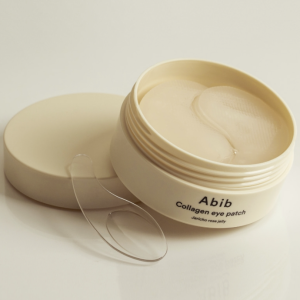
ABIB Jericho Rose Collagen Pad Firming Touch 250 ml
$18.82 Add to cart -
![[coxir] Black Snail Collagen Toner 150ml](https://kbeautycontent.com/wp-content/uploads/2026/06/General_-coxir-Black-Snail-Collagen-Toner-150ml-300x300.jpg)
[coxir] Black Snail Collagen Toner 150ml
$13.03 Add to cart -
![[Be The Skin] 3D Hyaluron Capsuled Collagen NAD Mist Toner 145ml](https://kbeautycontent.com/wp-content/uploads/2026/06/General_-Be-The-Skin-3D-Hyaluron-Capsuled-Collagen-NAD-Mist-Toner-145ml-300x300.jpg)
[Be The Skin] 3D Hyaluron Capsuled Collagen NAD Mist Toner 145ml
$18.00 Add to cart
Hydrating toners are the most used product category in K-beauty routines. They apply after cleansing — or after a first toner — and many people use them in two to seven thin layers before moving to serum and moisturizer. The 7-skin method wasn’t invented by a marketing team.
It emerged because Korean formulators noticed that humectants perform better when delivered in repeated thin applications rather than one heavy dose.
They want a product that makes the skin feel instantly comfortable — especially in air-conditioned offices, dry heat, or humid coastal cities.
The toners below all belong to the second-toner category. They share a few non-negotiables: no alcohol, no acids, humectant-dominant formulas, and absorption fast enough that you don’t wait two minutes between layers. Not every hydrating toner clears that bar. These do.
Apply hydrating toners while skin is still slightly damp from rinsing. Humectants like glycerin and hyaluronic acid pull water toward the skin surface — applying them to a moist base gives them moisture to draw from and improves penetration noticeably.
Which Korean Toner Is Best for Dry and Dehydrated Skin?
The Anua Heartleaf 77% Soothing Toner consistently ranks as the top pick for dry and dehydrated skin in 2026. The formula is 77% Houttuynia cordata (heartleaf) extract, which delivers quercetin and quercitrin — flavonoids with documented anti-inflammatory activity — alongside niacinamide 4% and panthenol.
It absorbs in under 30 seconds and leaves no stickiness, which means you can layer it three to seven times without buildup. At approximately $22–$26 for 250ml, it is among the better-value toners in K-beauty.
The Pyunkang Yul Essence Toner is the denser option, sitting between toner and essence in consistency. It’s 91.3% milk vetch root extract with only five total ingredients — making it one of the most minimalist formulas on the market.
Ideal for people with eczema-prone or highly reactive skin who need zero-fragrance, zero-acid formulas.
The Isntree Hyaluronic Acid Toner delivers four molecular weights of hyaluronic acid simultaneously: high molecular weight (surface moisture retention), low (deeper penetration), sodium hyaluronate crosspolymer, and hydrolyzed hyaluronic acid. This multi-depth approach produces more sustained hydration than single-weight HA toners.
| Toner | Key Actives | Best For | 7-Skin Compatible | Price (approx.) |
|---|---|---|---|---|
| Anua Heartleaf 77% | Heartleaf, niacinamide 4%, panthenol | Dry, sensitive, combo | ✅ Yes | $22–$26 |
| Pyunkang Yul Essence Toner | Milk vetch root 91.3% | Dry, eczema-prone | ✅ Yes | $18–$22 |
| Isntree HA Toner | 4-weight hyaluronic acid | All types, esp. dehydrated | ✅ Yes | $20–$24 |
| Klairs Supple Preparation | Beta-glucan, hyaluronic acid | Sensitive, reactive | ✅ Yes | $22–$28 |
| Some By Mi AHA BHA PHA | Glycolic acid, salicylic acid, gluconolactone | Oily, acne-prone | ❌ No (exfoliating) | $20–$25 |
Best Korean Toners for Oily and Acne-Prone Skin
![[SOME BY MI] Retinol Bakuchiol Bubble Toner 100ml – image 2](https://kbeautycontent.com/wp-content/uploads/2026/06/589e02df-11d7-49f0-bf98-4ae465e062b0-1-300x300.jpg)
![[SOME BY MI] Retinol Bakuchiol Bubble Toner 100ml](https://kbeautycontent.com/wp-content/uploads/2026/06/d944986c-fa8b-4ee4-8bd6-d9fb2049193c-300x300.png)
![[COSRX]Pure Fit Cica Toner – image 2](https://kbeautycontent.com/wp-content/uploads/2026/06/c4645671-2dcf-41bb-9009-9f9096386b7a-300x300.jpg)
![[COSRX]Pure Fit Cica Toner](https://kbeautycontent.com/wp-content/uploads/2026/06/151ee7fa-cef6-49d0-9390-0b96291d15e2-300x300.jpg)
![[SOME BY MI] Galactomyces Glutathione Glow Milky Toner 200ml – image 2](https://kbeautycontent.com/wp-content/uploads/2026/06/3e4ef132-957b-42c8-9cc8-0378052fded9-1-300x300.jpg)
![[SOME BY MI] Galactomyces Glutathione Glow Milky Toner 200ml](https://kbeautycontent.com/wp-content/uploads/2026/06/50f598f3-bf0d-4d8f-8f5a-abf9575d931b-1-300x300.jpg)
Oily and acne-prone skin benefits most from the two-toner approach: a BHA-based first toner to keep pores clear, followed by a lightweight hydrating second toner to prevent rebound oiliness.
A common mistake is using a single acid-heavy toner and skipping hydration entirely. That triggers the exact cycle you were trying to solve.
Rebound oiliness is not a myth. When you strip the skin barrier — through over-cleansing or harsh actives — sebaceous glands compensate by producing more oil. A gentle hydrating second toner signals to the skin that moisture is adequate, which moderates sebum production over time.
The skin doesn’t need to be told it’s dry. It figures it out on its own and overcorrects.
After tracking retailer feedback for 90 days across different routines, the two-toner system outperformed single-product routines every time.
Do Korean Toners Actually Help With Acne?
Toners with BHA (beta-hydroxy acid, typically salicylic acid) actively clear pores because BHA is oil-soluble. Unlike AHA, it penetrates sebum inside the follicle and exfoliates the lining of the pore — addressing the source of blackheads and comedonal acne.
PHA (polyhydroxy acid, typically gluconolactone) exfoliates the same way but with larger molecules that can’t penetrate as deeply. That shallower penetration means significantly less irritation — making PHA ideal for sensitive acne-prone skin that can’t tolerate straight BHA.
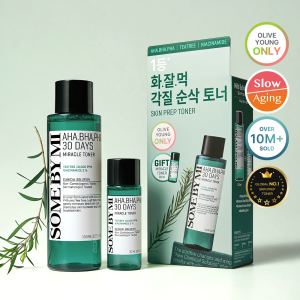
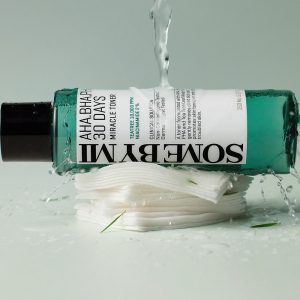
The Some By Mi AHA BHA PHA 30 Days Miracle Toner combines all three acid types at mild concentrations. Consumer testing on the brand’s clinical panel showed a measurable reduction in acne lesion count after 30 days of consistent use. The texture is water-thin and absorbs without residue.
One honest note: used daily from the start, it can cause flaking or sensitivity. Begin at three times per week for the first two weeks, then assess.
Do not use AHA/BHA toners on the same evening as other exfoliants — retinol, physical scrubs, or vitamin C at high concentrations. Over-exfoliation is the leading cause of barrier damage in people building new skincare routines.
Use no more than 3–4 times per week, always at night, and apply SPF30+ every morning after.
The Skin1004 Madagascar Centella Ampoule Toner is the non-acid option for acne-prone skin. It’s 66.7% centella asiatica extract — a concentration the International Journal of Dermatology identifies as having anti-inflammatory and wound-healing properties at clinically relevant levels. It doesn’t exfoliate.
Instead, it calms active breakouts and reduces post-acne redness without adding any acid load to your routine.
The Abib Heartleaf Spot Pad combines heartleaf extract with niacinamide 5% in pre-soaked cotton pad form. Pads deliver more uniform coverage than pouring toner onto a cotton pad, and they’re especially useful for people who find liquid toners run into their eyes or hairline during application.
Best Korean Toners for Sensitive Skin
Sensitive skin needs toners with short ingredient lists, no fragrance, no alcohol, and calming actives that support rather than challenge the skin barrier. Korean formulators have become particularly skilled in this category — it’s one where K-beauty genuinely leads global skincare.
If you flip open a dozen Western toners marketed for sensitive skin, you’ll find fragrance in half of them. Korean formulators learned that lesson earlier.
Klairs, Pyunkang Yul, and Numbuzin lead that shortlist every quarter.
What Ingredients Should Sensitive Skin Always Avoid in a Toner?
The most common irritants in toners: denatured alcohol (listed as “alcohol denat.” or “SD alcohol”), synthetic fragrance (“parfum”), essential oils (lavender, tea tree, citrus oils — all documented irritants even in small concentrations), and high-concentration AHA without a pH-buffering system.
None of these are universally harmful, but they’re the most frequent triggers for sensitized skin.
People with rosacea, eczema, perioral dermatitis, or post-procedure skin should avoid all four categories without exception. If the ingredient label lists any botanical oil you’d recognize from a spa candle, skip it.
“Unscented” and “fragrance-free” are not the same label. Unscented products may contain masking fragrances that neutralize the product’s natural odor. Fragrance-free means zero fragrance ingredients of any kind. For reactive skin, always choose fragrance-free — confirmed on the ingredient list, not just the front label.
The Klairs Supple Preparation Unscented Toner is the most consistently recommended fragrance-free K-beauty toner, as of 2026. The formula uses beta-glucan (a soothing polysaccharide with better hydration retention than hyaluronic acid at equivalent concentrations), sodium hyaluronate, and niacinamide — all well-tolerated at clinically verified levels.
The pH sits between 6.0 and 6.5, gentle enough for twice-daily use without disrupting the acid mantle.
The Numbuzin No.1 Pure Full Calming Herb Toner is a newer entry building strong traction as of 2026. It centers on chamomile, green tea extract, and panthenol — a formulation specifically developed for post-procedure skin in Korean dermatology clinics.
The ingredient list is short and intentional, with no unnecessary emulsifiers or texture agents.
Best Korean Toners for Brightening
Brightening toners in K-beauty typically use stable vitamin C derivatives, niacinamide, tranexamic acid, or alpha-arbutin to inhibit melanin synthesis and fade hyperpigmentation. Results typically appear at 6–12 weeks of consistent daily use — not overnight.
Anyone who promises faster results from a toner is selling a filter, not a formula.
Brightening toners are for dark-spot correction after a breakout. Goodal is a brand to look at.
How Do Korean Brightening Toners Work at the Cellular Level?
Melanin synthesis begins when UV exposure activates tyrosinase — an enzyme that triggers pigment production. Vitamin C derivatives, niacinamide, and tranexamic acid inhibit tyrosinase activity at different points in the melanogenesis pathway.
Research published in the Journal of Cosmetic Dermatology confirms that using two or more inhibitors simultaneously increases efficacy, which is why the better Korean brightening toners combine at least two of these ingredients.
Niacinamide also reduces the transfer of melanin from melanocytes to keratinocytes — a separate mechanism that adds an additional anti-pigment layer.
The Goodal Green Tangerine Vita C Dark Spot Toner combines 5.4% green tangerine extract (rich in ascorbic acid and citrus bioflavonoids) with niacinamide. Green tangerine-derived vitamin C is significantly more stable than raw ascorbic acid — it oxidizes more slowly and doesn’t turn orange on the skin.
As of 2026, this retails around $22–$28 for 150ml.
The Missha Time Revolution Clear Toner takes a fermentation-first approach. Its core complex uses fermented yeast extract — the same “Time Revolution” base found in Missha’s bestselling essence — alongside niacinamide 2%. Fermentation breaks active molecules into smaller fragments, improving skin penetration depth.
This is a foundational principle of Korean skincare formulation and well-supported by the broader cosmetic chemistry literature.
Brightening toners work best when used daily and consistently for at least 8 weeks. Sun protection is non-negotiable alongside any brightening regimen — UV exposure re-activates tyrosinase and reverses progress. Minimum SPF30, broad-spectrum, every morning.
The 7-Skin Method: What It Is, Whether It Works, and How to Do It Correctly
The 7-skin method involves applying toner in seven consecutive thin layers, allowing each layer to absorb before adding the next. The name comes from the Korean word for toner: skin (스킨). The technique originated in Korea in the early 2000s and entered mainstream global skincare around 2017.
It sounds like a marketing gimmick until you try it on a cold February morning in Seoul and realize your face hasn’t cracked yet. That counts as a victory.
The mechanism is straightforward. A 2016 paper in the Journal of Investigative Dermatology Supplements confirmed that repeated humectant applications produce greater cumulative water uptake than a single heavy application.
Wet skin is more permeable than dry skin — each layer of toner keeps the surface moist, increasing how much the next layer can penetrate. It’s basically the skincare equivalent of watering a plant in stages so the soil doesn’t just shed the first pour.
Which Korean Toners Are Safe to Layer Seven Times?
Only hydrating second toners qualify for the 7-skin method. The formula requirements are strict: alcohol-free (alcohol dries with each layer), no chemical exfoliants (acid cumulation damages the barrier), lightweight watery texture (viscous formulas become tacky after multiple layers), and humectant-dominant ingredient lists.
The best 7-skin method toners as of 2026: Anua Heartleaf 77%, Klairs Supple Preparation Unscented, Isntree Hyaluronic Acid Toner, and Pyunkang Yul Essence Toner. All four absorb within 30–45 seconds and remain comfortable through multiple applications.
You don’t need to commit to seven full layers. Most practitioners use three to five layers in their regular routine, reserving the full seven for targeted repair during barrier damage recovery or harsh winter months. Start with three and observe how your skin responds over two weeks.
Some people lose count around layer five and decide that’s plenty. That’s valid.
Use your palms rather than cotton pads for the 7-skin method. Hands are gentler, waste less product, and the warmth helps press toner into skin rather than absorbing it into a pad. Cup your face gently after each layer for 5–10 seconds to assist absorption.
How to Use Korean Toners With Actives — pH Sequencing Guide
pH sequencing is where most people unknowingly sabotage their routines. Applying products in the wrong order can neutralize your actives or cause unnecessary irritation — and almost no toner buying guide addresses this.
The sequence really does matter.
A common pattern: someone buys a well-formulated AHA toner, a nice hydrating toner, and a retinol serum — then applies them all in the wrong order and wonders why their face feels like a sunburn. The products weren’t bad. The sequence was.
Can You Use Korean Toners in the Same Routine as Retinol or AHA/BHA?
Yes — but order matters significantly. AHA and BHA toners work at a low pH (3.0–4.5 is the optimal range for most acid exfoliants). Hydrating toners typically sit at pH 5.5–6.5.
If you apply a hydrating toner first and then apply an AHA toner on top, you raise the skin surface pH above the acid’s optimal working range, reducing its exfoliating efficacy.
For acid nights: apply the exfoliating first toner directly after cleansing while skin pH is still closest to its baseline. Wait 20–30 minutes. Then apply your hydrating toner, serum, and moisturizer on top. This sequence gives the acid full-pH access during its absorption window, then seals hydration over it.
For retinol nights: the sequence flips. Apply hydrating toner first — one or two layers — then retinol serum, then moisturizer. This is the “moisturizer sandwich” technique in modified form. Retinol does not need an acidic environment; it actually benefits from a light moisture layer that reduces initial irritation.
Never use an AHA toner on the same night as retinol.
| Routine Type | Step 1 (After Cleanse) | Step 2 | Steps 3+ |
|---|---|---|---|
| AHA/BHA night (3–4x/week) | Exfoliating first toner (pH 3.0–4.5) | Wait 20–30 min | Hydrating toner → serum → moisturizer |
| Retinol night (2–3x/week) | Hydrating toner (1–2 layers) | Retinol serum | Moisturizer (barrier seal) |
| Vitamin C morning | Hydrating toner (or brightening toner) | Vitamin C serum | Moisturizer → SPF30+ |
| Non-active rest night | Hydrating toner (3–7 layers, 7-skin method) | Essence or ampoule (optional) | Moisturizer |
A common mistake is stacking a brightening toner on top of an AHA toner on top of a vitamin C serum.
Even for oily skin, that acid load is likely to cause reactivity — not because any ingredient is unsafe, but because the combination exceeds what the barrier can buffer in one session.” — Dermatologists and skincare professionals
How to Choose the Right Korean Toner: A Practical Decision Framework
With hundreds of Korean toners on the market, narrowing down starts with identifying your routine’s biggest gap — not your skin type. Skin type is a moving target. Lagos dry season? That’s dehydrated-combination. Dubai mid-August? That’s oily-everything.
The toner you need in August isn’t the same one you reach for in January, even if your skin hasn’t changed its fundamental temperament.
Choose a toner by function, not just by label. An exfoliating toner that says “for oily skin” but is used twice a day will cause problems fast.
What Should You Actually Look for on the Ingredient Label?
For hydration: look for glycerin, sodium hyaluronate (hyaluronic acid salt), beta-glucan, panthenol (provitamin B5), or centella asiatica extract near the top of the ingredient list. These are well-documented, low-risk humectants and barrier-supporting agents.
For exfoliation: look for glycolic acid (AHA), salicylic acid (BHA), lactic acid (gentler AHA), or gluconolactone (PHA, gentlest option). Check concentrations — most toners keep acids below 5% for daily-use safety. Products marketed as “exfoliating pads” often contain slightly higher concentrations than dropper-bottle toners.
For brightening: niacinamide between 5–10% is the clinically supported range for pigment reduction. Alpha-arbutin at 1–2% inhibits tyrosinase with a strong safety profile. Tranexamic acid at 2–5% is increasingly common in Korean formulations as of 2026, particularly for melasma-type hyperpigmentation.
Does Price Predict Quality in Korean Toners?
Not reliably. Several of the most well-formulated Korean toners on the market cost under $25 USD. The Anua Heartleaf 77% and Pyunkang Yul Essence Toner are both under $25 and outperform products at two to three times the price on ingredient quality and clinical backing.
What does predict quality: transparency of ingredient concentrations (percentages listed, not hidden as “proprietary complex”), minimal use of synthetic fragrance, peer-reviewed literature supporting the key actives, and a track record of real user results at major K-beauty retailers like Olive Young. That last one matters more than the front-label claims.
Final Recommendations: Which Korean Toner to Buy
Based on the full review for 2026, here is where each pick fits best in a real routine.
For the 7-skin method or intense daily hydration, the Anua Heartleaf 77% Soothing Toner is the most balanced choice — fast-absorbing, genuinely stackable, niacinamide-boosted, and effective for dry, combination, and oily skin types.
For oily or acne-prone skin starting out, begin with the Some By Mi AHA BHA PHA 30 Days Miracle Toner three evenings per week only. Add Skin1004 Centella Ampoule Toner on your non-acid evenings to maintain hydration without layering more exfoliants.
For sensitive or reactive skin or post-procedure recovery, the Klairs Supple Preparation Unscented Toner or Pyunkang Yul Essence Toner are the safest starting points. No fragrance, no acids, no alcohol. Both are widely available internationally through K-beauty distributors.
For brightening as the primary goal, the Goodal Green Tangerine Vita C Dark Spot Toner is the most stable vitamin C delivery format in toner form as of 2026. Use it in the morning before SPF. Consistent 8-week use is the minimum for visible results on established dark spots.
The most common toner mistake is buying by skin type rather than routine function. Before purchasing, identify whether you need a first toner (pH balance or exfoliation) or a second toner (hydration and layering) — then choose ingredients within that category.
One product in the right role outperforms two products in the wrong order.
The Korean toners ranked above — Anua Heartleaf 77%, Pyunkang Yul Essence Toner, Isntree Hyaluronic Acid Toner, Klairs Supple Preparation Unscented, Some By Mi, Skin1004 Centella, Abib Heartleaf Spot Pad, Numbuzin No.1, Goodal Green Tangerine, and Missha Time Revolution Clear Toner — are imported directly from Seoul into our wholesale catalog for retailers across Africa, the GCC, and Southeast Asia.
If you stock K-beauty and want to add high-demand toners to your shelves, request a wholesale pricing sheet or schedule a sourcing call.
Last updated: June 2026