
![[Anua] PDRN Collagen Melting Patch for Glass Skin (4ea)](https://kbeautycontent.com/wp-content/uploads/2026/06/e1ae3d67-a088-4325-9208-f8d6acaad1d5-4.png)
- Look for Korean sunscreens with hyaluronic acid, panthenol, glycerol, or snail mucin — these hydrate without clogging pores
- Avoid ingredients like coconut oil, shea butter, and heavy silicones that trigger breakouts in acne-prone skin
- Stick with SPF 50+ PA++++ chemical or hybrid formulas — they’re lightweight and invisible under makeup
- Check for non-comedogenic and fungal acne-safe labels — they’re not the same thing, and knowing the difference matters
You’ve tried sunscreen before and it left you with a face full of angry little bumps. Or maybe it was cystic acne that took weeks to calm down. Either way, you’re not alone.
Nearly 40% of people with acne-prone skin report that sunscreen triggers breakouts, according to dermatological surveys. The problem? Most sunscreens use heavy emollients and comedogenic oils that clog pores.
Korean sunscreens solve this. They’re formulated with lighter textures, skin-soothing ingredients like hyaluronic acid and panthenol, and advanced UV filters that feel like nothing on your skin.
There’s one mistake 90% of buyers make. It is covered in the next section.
Here is exactly what to look for, what to avoid, and which products actually deliver.
| What to Look For | Why It Matters | What to Avoid |
|---|---|---|
| Hyaluronic acid, panthenol, glycerol, snail mucin | Hydrate without clogging pores; reduce irritation | Coconut oil, shea butter, cocoa butter |
| SPF 50+ PA++++ | Maximum UVA/UVB protection in minimal layers | Low SPF formulas (SPF 30 or below often require thick reapplication) |
| Non-comedogenic + fungal acne-safe labels | Ensures pores stay clear; prevents two distinct acne types | Fermented ingredients, polysorbates (for fungal acne) |
| Chemical or hybrid UV filters | Lighter texture than physical sunscreens; no white cast | Zinc oxide-heavy physical sunscreens (can feel heavy) |
What ingredients in Korean sunscreen trigger acne breakouts?
Not all sunscreens are created equal — and the wrong ingredients will wreck your skin.
The biggest culprits are comedogenic oils and heavy emollients. Coconut oil, shea butter, and cocoa butter rank high on the comedogenic scale (4-5 out of 5). These ingredients sit on top of pores and trap bacteria and sebum underneath.
Here’s what else triggers breakouts:
- Heavy silicones like dimethicone — they create a film that traps oil when used in high concentrations
- Ethylhexyl palmitate — a common emollient in chemical sunscreens that scores 4/5 on the comedogenic scale
- Reef-unsafe filters like oxybenzone and octinoxate — while not directly comedogenic, they can irritate sensitive acne-prone skin
Which Korean sunscreen ingredients are safe for acne-prone skin?
![[COSRX] Ultra Light Invisible Sunscreen 50ml – image 2](https://kbeautycontent.com/wp-content/uploads/2026/06/aa8863b1-d869-40cc-96a2-dfe53c9c5558-2-300x300.jpg)
![[COSRX] Ultra Light Invisible Sunscreen 50ml](https://kbeautycontent.com/wp-content/uploads/2026/06/914e62de-3f4f-473c-b8a2-9c0e2892e70c-2-300x300.jpg)
![[COSRX] Ultra Light Invisible Sunscreen 50ml (3EA) – image 2](https://kbeautycontent.com/wp-content/uploads/2026/06/aa8863b1-d869-40cc-96a2-dfe53c9c5558-3-300x300.jpg)
![[COSRX] Ultra Light Invisible Sunscreen 50ml (3EA)](https://kbeautycontent.com/wp-content/uploads/2026/06/914e62de-3f4f-473c-b8a2-9c0e2892e70c-3-300x300.jpg)
The good news? Korean brands prioritize lightweight, skin-friendly formulations. Most of their sunscreens use modern UV filters that sit on the skin’s surface instead of absorbing into it.
Why does hyaluronic acid matter in sunscreen?
Hyaluronic acid hydrates the skin without adding oil. It’s a humectant — it pulls moisture from the air into your skin. In a sunscreen, this means your moisture barrier stays intact without feeling greasy.
The Isntree Hyaluronic Acid Natural Sun Cream SPF 50+ is a perfect example. It contains hyaluronic acid as a core ingredient, and it wears like a lightweight moisturizer.
How does panthenol help acne-prone skin?
Panthenol (provitamin B5) hydrates the skin while calming inflammation. For breakout-prone skin, this is gold. Acne is an inflammatory condition — panthenol reduces redness and irritation without adding pore-clogging oils.
The COSRX Ultra-Light Invisible Sunscreen SPF 50 PA++++ contains panthenol alongside centella asiatica. With only 28 ingredients, it’s a clean formula. It’s also fungal acne-safe, which matters more than most people realize.
What about glycerol and snail mucin?
Glycerol hydrates the skin by drawing moisture into the outer layer. It’s non-comedogenic, lightweight, and found in almost every Korean sunscreen worth buying.
Snail mucin hydrates the skin while also supporting collagen production and reducing hyperpigmentation from old breakouts. The Missha All Around Safe Block Essence Sun Milk SPF 50+ PA+++ contains snail mucin among its 55 ingredients. It’s rich, but it doesn’t clog pores because snail mucin has a very low comedogenic rating.
Should I use chemical, physical, or hybrid sunscreen for acne-prone skin?
-
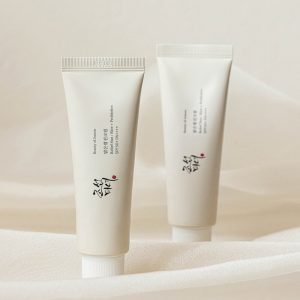
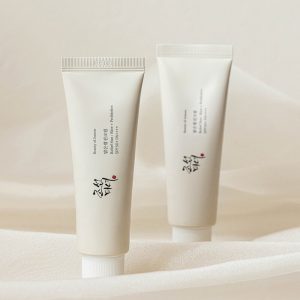
![[Beauty Of Joseon] *TIMEDEAL* Relief Sun : Rice + Probiotics 50ml (4EA) – image 2](https://kbeautycontent.com/wp-content/uploads/2026/06/a602c229-42fe-4169-ba77-5ba77dd569ac-3-300x300.jpg)
![[Beauty Of Joseon] *TIMEDEAL* Relief Sun : Rice + Probiotics 50ml (4EA)](https://kbeautycontent.com/wp-content/uploads/2026/06/1fc08dc1-0e19-46a7-9728-b1d818195503-3-300x300.jpg)
[Beauty Of Joseon] Relief Sun : Rice + Probiotics 50ml (4EA)
$15.88 Add to cart -
![[Beauty of Joseon] Relief Sun Aqua-fresh : Rice + B5 50ml](https://kbeautycontent.com/wp-content/uploads/2026/06/3cc2f75e-f308-4870-9731-dae8a24e1c8e-1-300x300.jpg)
[Beauty of Joseon] Relief Sun Aqua-fresh : Rice + B5 50ml
$15.88 Add to cart -
![[Beauty Of Joseon] Relief Sun : Rice + Probiotics 50ml*3ea – image 2](https://kbeautycontent.com/wp-content/uploads/2026/06/a602c229-42fe-4169-ba77-5ba77dd569ac-300x300.jpg)
![[Beauty Of Joseon] Relief Sun : Rice + Probiotics 50ml*3ea](https://kbeautycontent.com/wp-content/uploads/2026/06/1fc08dc1-0e19-46a7-9728-b1d818195503-300x300.jpg)
[Beauty Of Joseon] Relief Sun : Rice + Probiotics 50ml*3ea
$15.88 Add to cart -
![[Beauty of Joseon] *TIMEDEAL* Relief Sun Aqua-fresh : Rice + B5 50ml (4EA)](https://kbeautycontent.com/wp-content/uploads/2026/06/3cc2f75e-f308-4870-9731-dae8a24e1c8e-6-300x300.jpg)
[Beauty of Joseon] Relief Sun Aqua-fresh : Rice + B5 50ml (4EA)
$15.88 Add to cart
Hybrid sunscreens are the best choice for acne-prone skin. They combine modern chemical filters with small amounts of zinc oxide or titanium dioxide for extra protection.
Here’s the breakdown:
- Chemical sunscreens: Thin, invisible, zero white cast. Modern Korean filters like Uvinul A Plus and Tinosorb S are gentle on sensitive skin. Avoid older filters like oxybenzone.
- Physical sunscreens: Zinc oxide and titanium dioxide sit on top of skin. They can feel heavy and often leave a white cast. Better for very sensitive skin but harder to layer under makeup.
- Hybrid sunscreens: The best of both worlds. Light texture with mineral protection. The CellFusionC Advanced Clear Sunscreen is a strong hybrid option that layers well.
The bottom line? If you have acne-prone skin, go with a chemical or hybrid formula that uses modern filters. Physical sunscreens can be too thick and may cause breakout-prone skin to overproduce oil underneath.
What does “non-comedogenic” actually mean in sunscreen?
Non-comedogenic means the product won’t clog your pores. But here’s the catch — it’s not a regulated term in Korea or the US.
Brands self-test and self-label. One brand’s “non-comedogenic” might mean “we tested it on six people and nobody broke out.” That’s not rigorous science.
What’s the difference between traditional acne and fungal acne in sunscreen selection?
Traditional acne (bacterial) is caused by Propionibacterium acnes trapped inside pores. Fungal acne (Malassezia) is caused by yeast overgrowth in hair follicles.
The treatments are different. For traditional acne, you want non-comedogenic ingredients and maybe niacinamide or retinol in your routine.
For fungal acne, you need to avoid all fatty acids, esters, and fermented ingredients — even ones that are technically non-comedogenic. Snail mucin, for example, is safe for traditional acne but feeds fungal acne.
The COSRX Ultra-Light Invisible Sunscreen is both non-comedogenic and fungal acne-safe. The Laneige Water Bank UV Barrier is non-comedogenic but not fungal acne-safe due to fatty ingredients.
How do I choose between lightweight formulas and high protection?
You don’t have to choose — modern Korean sunscreens deliver both. Every product recommended here hits SPF 50+ PA++++ with a lightweight texture.
The Neogen Day-Light Protection Airy Sunscreen SPF 50 is a standout. It’s described as “airy” for good reason — it disappears into the skin within 30 seconds.
The Active Nine Intensive UV Shield Mild Sun Relief Cream is another option. It has a gel-cream texture that layers well under makeup without pilling.
Which Korean sunscreens are actually fungal acne-safe?
This is the content gap most articles miss. Here are the specifics.
Fungal acne-safe Korean sunscreens verified by ingredient analysis (as of 2026):
| Product | Key Soothers | Fungal Acne Safe? |
|---|---|---|
| COSRX Ultra-Light Invisible SPF 50 PA++++ | Panthenol, centella | Yes — 28 ingredients, all safe |
| Elizavecca Milky Piggy Sun Stick SPF50+ PA++ | Mineral oil base, minimal ingredients | Yes — $8.59, most affordable option |
| Neogen Day-Light Airy SPF 50 | Glycerol, niacinamide | Yes — no fatty acids or esters |
| Laneige Water Bank UV Barrier SPF 50+ | Hyaluronic acid, green tea | No — contains fatty ingredients |
When should I see a dermatologist about sunscreen breakouts?
If you’ve tried three different non-comedogenic sunscreens and still breakout, see a dermatologist.
Here’s when to make the call:
- You get cystic acne (deep, painful bumps) within 48 hours of any sunscreen
- Your breakouts don’t respond to salicylic acid or benzoyl peroxide
- You have clusters of small, uniform bumps that are itchy — that’s probably fungal acne
- You’ve been dealing with post-inflammatory hyperpigmentation (dark spots) from old breakouts and need prescription-strength treatment
Frequently Asked Questions
Can I use Korean sunscreen if I’m on retinol or prescription acne medication?
Yes, but you must use SPF 50+ PA++++ every single day. Retinol and prescription acne medications like tretinoin make your skin extremely photosensitive. Korean sunscreens are ideal because they’re gentle enough for sensitized skin.
The Isntree Hyaluronic Acid Natural Sun Cream is a top pick for retinol users. The hyaluronic acid helps maintain your moisture barrier while the SPF protects it.
Will Korean sunscreen leave a white cast on dark skin tones?
Most Korean chemical sunscreens don’t leave a white cast. Physical sunscreens (zinc oxide/titanium dioxide) can, but chemical and hybrid formulas use nano-sized filters that are virtually invisible.
For dark skin tones, stick with chemical formulas. The CellFusionC Advanced Clear Sunscreen is completely transparent on all skin tones. Read more in the guide to best Korean sunscreens for dark skin tones.
Do I still need moisturizer under Korean sunscreen for acne-prone skin?
Not if your sunscreen contains hydrating ingredients like hyaluronic acid or glycerol. Many Korean sunscreens double as moisturizers. The Laneige Water Bank UV Barrier has enough hyaluronic acid and ceramide content that you can skip your AM moisturizer entirely.
If you prefer a separate moisturizer, stick with lightweight, gel-based formulas. See the guide on best Korean moisturizers for acne-prone skin.
How much Korean sunscreen should I apply?
The same amount as any sunscreen: ¼ teaspoon for your face and neck. That’s about two finger-length strips. Korean sunscreens are lightweight, so it’s easy to apply this amount without feeling heavy.
Are Korean sunscreens reef-safe?
Most are, but not all. Korea banned oxybenzone and octinoxate for domestic manufacturing, but some brands still use octocrylene. Check for reef-safe certifications if that matters to you.
The COSRX and Neogen formulas are both reef-safe.
Related Reading
- Best Korean Skincare for Acne-Prone Skin — Full routine from cleanser to SPF
- Best Korean Sunscreens for Dark Skin Tones — No white cast guarantee
- Best Korean Moisturizers for Acne-Prone Skin — Hydration without breakouts
Last updated: May 03, 2026