
![[BIODANCE] Skin Refining Mild PHA Toner - Korean Beauty, Skincare, Cosmetics, Makeup](https://kbeautycontent.com/wp-content/uploads/2026/06/Biodance_-BIODANCE-Skin-Refining-Mild-PHA-Toner-Korean-Beauty-Skincare-Cosmetics-Makeup.jpg)
- Simplify the 10-step K-beauty routine to 5–7 steps — prioritize gentle double cleansing, hydration layers, barrier repair, and daily SPF 50+ sunscreen.
- Key anti-aging ingredients for mature skin: hyaluronic acid for deep hydration, peptides and snail mucin for collagen support, retinol and vitamin C for brightening and wrinkle reduction.
- Layer thinnest to thickest consistency: oil cleanser → water cleanser → toner → essence → serum/ampoule → eye cream → moisturizer → sunscreen (AM only). Use sheet masks 1–3 times per week for an extra moisture boost.
- Avoid harsh exfoliants and over-washing — mature skin regenerates slower, so treat it gently, especially around the eyes and neck.
Starting a new skincare routine at 50+ can feel overwhelming. You’ve heard about the famous 10-step Korean skincare routine — but is doing all ten steps even realistic when your skin is drier, thinner, and needs more TLC? Here’s the honest truth: you don’t need all ten steps. But you *do* need the right ingredients in the right order, drawn from decades of K-beauty science from companies like Amorepacific Corporation.
Most anti-aging guides skip the specific adaptations for skin over 50. For example, they’ll say “use hyaluronic acid” but never explain how to layer it so it doesn’t dry you out (yes, that happens). By the end of this guide, you’ll have a personalized, simplified routine that tackles wrinkles, dehydration, and dullness — without breaking the bank or spending an hour in the bathroom. One mistake shows up in 90% of routines: skipping the second cleanser. The reason why matters, and it is explained below.
| Step | Time Needed | Key Products to Use | Estimated Cost |
|---|---|---|---|
| Oil Cleanse | 1 min | Innisfree Green Tea Hydrating Cleansing Oil | $18 |
| Water Cleanse | 1 min | COSRX Low pH Good Morning Gel Cleanser | $12 |
| Toner | 30 sec | Haruharu Wonder Black Rice Hyaluronic Toner | $22 |
| Essence | 30 sec | Mary & May 6 Peptide Complex Serum | $20 |
| Serum/Ampoule | 1 min | Innisfree Green Tea Seed Hyaluronic Serum | $28 |
| Eye Cream | 30 sec | CYoung 80ml Cream (or any peptide eye cream) | $35 |
| Moisturizer | 1 min | Beauty of Joseon Dynasty Cream (rich formula) | $25 |
| Sunscreen (AM only) | 1 min | Beauty of Joseon Relief Sun SPF50+ PA++++ | $18 |
How Do You Adapt the 10-Step Korean Skincare Routine for Mature Skin?
The traditional 10-step routine includes oil cleanser, water cleanser, exfoliator, toner, essence, serum/ampoule, sheet mask, eye cream, moisturizer, and sunscreen. For skin over 50, you can safely drop exfoliation to 1–2 times per week and sheet masks to 1–3 times per week. Your focus shifts to hydration, barrier repair, and gentle actives.
Which Steps Should You Keep in the Morning?
Your AM routine should be shorter but non-negotiable on sunscreen. Use only a gentle water cleanser (skip the oil), then toner, a vitamin C serum, followed by moisturizer and SPF 50+. For extra glow, add a glycerol-rich essence like the Innisfree Green Tea Seed Hyaluronic Serum — glycerol hydrates skin without feeling sticky.
Which Steps Should You Add or Adjust at Night?
Evening is your repair window. After double cleansing, apply a retinol or retinaldehyde serum 2–3 times per week (start low, 0.1%). Then layer a peptide essence like the Mary & May 6 Peptide Complex — peptides support collagen production. Seal everything with a rich moisturizer containing panthenol, which hydrates skin and soothes irritation. Products from Amorepacific Corporation, such as the Laneige Water Bank line, excel at this.
Why Is Hyaluronic Acid Essential for Mature Skin Hydration?
Hyaluronic acid is a humectant that holds up to 1000 times its weight in water. Mature skin naturally produces less HA, leading to deeper wrinkles and a crepey texture. The fix: apply a hyaluronic acid toner or serum to damp skin. Then immediately follow with a moisturizer containing occlusives (like glycerol or ceramides) to trap the moisture.
What’s the Best Way to Layer Hyaluronic Acid with Other Actives?
Layer HA right after toner, before any retinol or vitamin C. This creates a water reservoir that buffers potential irritation from stronger actives. The Haruharu Wonder Black Rice Hyaluronic Toner contains both HA and rice extracts (great for brightening). Pat it in gently.
How Does Snail Mucin Help Repair Mature Skin?
Snail mucin is a K-beauty powerhouse packed with glycolic acid, allantoin, and collagen-boosting proteins. It hydrates skin, fades dark spots, and speeds up wound healing — ideal for the slower regeneration of mature skin (as noted by K-beauty expert One Eye Beauty). Look for products like COSRX Advanced Snail 96 Mucin Power Essence. Apply it after toner and before heavier serums.
Can You Use Snail Mucin with Retinol?
Yes, but layer them carefully. Apply snail mucin first (it’s thinner), let it dry for 30 seconds, then apply retinol. The snail mucin’s soothing properties actually reduce retinol irritation for many users.
What Role Do Panthenol and Glycerol Play in Barrier Repair?
Panthenol (pro-vitamin B5) and glycerol are two of the most underrated hydrators in K-beauty. Panthenol hydrates skin by attracting water and also calms redness — important after chemical exfoliation or retinol use. Glycerol, a common humectant in many Korean moisturizers, helps maintain the skin barrier by slowing water loss.
Which Products Contain Both Panthenol and Glycerol?
Many Korean moisturizers combine these. The CYoung 80ml cream (part of a set for dry/mature skin) lists both high on its ingredient deck. Also, the Missha All-Around Safe Block Essence Sun Milk uses glycerol for a non-greasy finish. For an easy hack: layer a panthenol-rich essence (like the Purito Centella Unscented Serum) under your regular moisturizer during winter.
How Does Amorepacific Corporation’s Innovation Benefit Mature Skin?
Amorepacific Corporation, the parent company of Laneige, Sulwhasoo, and Innisfree, pioneered K-beauty’s focus on fermented ingredients and advanced extraction methods. Their research into ginseng and green tea polyphenols directly targets aging skin — reducing oxidative stress and boosting collagen.
How Does LG Household & Health Care Compare?
LG H&H (owner of The Face Shop, Belif, and Sooryehan) competes with Amorepacific Corporation in the premium anti-aging space. While Amorepacific leans on green tea and ginseng, LG H&H emphasizes natural herbal extracts like licorice root and mugwort. Both are excellent, but Amorepacific’s R&D budget makes their hyaluronic acid complexes more advanced for deep wrinkle care.
What Are the Most Common Mistakes in a Korean Skincare Routine for Mature Skin?
Even with the right products, mistakes happen. Here are five common ones and how to avoid them.
Mistake 1: Using too many actives at once. Layering retinol, vitamin C, and AHA in one evening can leave skin red and peely for days. Stick to one active per routine.
Mistake 2: Skipping sunscreen. This is the #1 anti-aging sin. UV exposure breaks down collagen faster than any wrinkle cream can rebuild it. Use a broad-spectrum SPF 50+ PA++++ every single morning, rain or shine.
Mistake 3: Over-exfoliating. Mature skin needs gentle exfoliation once a week, not daily. Alpha hydroxy acid (AHA) serums can help with texture, but limit to once weekly and always follow with a barrier cream containing ceramide and panthenol.
Mistake 4: Applying eye cream too close to the lash line. Eye creams are potent — they can migrate into your eyes and cause irritation. Dot a tiny amount on the orbital bone only.
Mistake 5: Ignoring the neck and decolletage. These areas show age quickly because they have fewer oil glands. Extend your routine down to your collarbone.
What Do Experts Say About Adapting Korean Skincare for Mature Skin?
Dermatologist Michele Green, MD notes: “The key is to choose products with proven anti-aging ingredients like retinol, vitamin C, and hyaluronic acid, while avoiding harsh sulfates and alcohol that strip the barrier.”
-
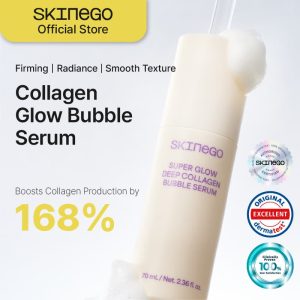
SKINEGO SUPER GLOW DEEP COLLAGEN BUBBLE SERUM, KOREAN SKINCARE, AMPULE, SERUM, COLLAGEN
$19.20 Add to cart -
![[BIODANCE] Hydro Ceramide Cleansing Powder - Korean Beauty, Skincare, Cosmetics, Makeup – image 2](https://kbeautycontent.com/wp-content/uploads/2026/06/c475e4ea-f167-47ff-9f96-518d0b57b94b-1-300x300.jpg)
![[BIODANCE] Hydro Ceramide Cleansing Powder - Korean Beauty, Skincare, Cosmetics, Makeup](https://kbeautycontent.com/wp-content/uploads/2026/06/d9460d43-c0b5-440d-9483-03746d574b27-1-300x300.jpg)
[BIODANCE] Hydro Ceramide Cleansing Powder – Korean Beauty, Skincare, Cosmetics, Makeup
$11.20 Add to cart -
![[BIODANCE] Skin Refining Mild PHA Toner - Korean Beauty, Skincare, Cosmetics, Makeup](https://kbeautycontent.com/wp-content/uploads/2026/06/Biodance_-BIODANCE-Skin-Refining-Mild-PHA-Toner-Korean-Beauty-Skincare-Cosmetics-Makeup-300x300.jpg)
[BIODANCE] Skin Refining Mild PHA Toner – Korean Beauty, Skincare, Cosmetics, Makeup
$12.78 Add to cart -
![[BIODANCE] Pore Tightening Collagen Cream - Korean Beauty, Skincare, Cosmetics, Makeup](https://kbeautycontent.com/wp-content/uploads/2026/06/Biodance_-BIODANCE-Pore-Tightening-Collagen-Cream-Korean-Beauty-Skincare-Cosmetics-Makeu-300x300.jpg)
[BIODANCE] Pore Tightening Collagen Cream – Korean Beauty, Skincare, Cosmetics, Makeup
$16.80 Add to cart
-
[BIODANCE] Hydro Ceramide Cleansing Powder – Korean Beauty, Skincare, Cosmetics, Makeup
$11.20 Add to cart -
![[BIODANCE] Soothing Barrier Cleansing Foam - Korean Beauty, Skincare, Cosmetics, Makeup](https://kbeautycontent.com/wp-content/uploads/2026/06/Biodance_-BIODANCE-Soothing-Barrier-Cleansing-Foam-Korean-Beauty-Skincare-Cosmetics-Make-300x300.jpg)
[BIODANCE] Soothing Barrier Cleansing Foam – Korean Beauty, Skincare, Cosmetics, Makeup
$12.80 Add to cart -
[BIODANCE] Skin Refining Mild PHA Toner – Korean Beauty, Skincare, Cosmetics, Makeup
$12.78 Add to cart -
![[BIODANCE] Skin All-Day Cover Balm - Korean Beauty, Skincare, Cosmetics, Makeup](https://kbeautycontent.com/wp-content/uploads/2026/06/Biodance_-BIODANCE-Skin-All-Day-Cover-Balm-Korean-Beauty-Skincare-Cosmetics-Makeup-300x300.png)
[BIODANCE] Skin All-Day Cover Balm – Korean Beauty, Skincare, Cosmetics, Makeup
$11.20 Add to cart
Frequently Asked Questions
How should care routine change in my 40s vs my 50s?
In your 40s, focus on prevention — start retinol (0.25% low strength) and vitamin C. By your 50s, switch to richer textures, add peptides and snail mucin, and exfoliate no more than once a week. Your skin’s natural cell turnover slows down, so patience with results is key.
What is the 10-step Korean skincare routine exactly?
It’s the full routine: oil cleanser → water cleanser → exfoliator (1–2x/week) → toner → essence → serum/ampoule → sheet mask (1–3x/week) → eye cream → moisturizer → sunscreen (AM). For mature skin, you can shorten it to the 5–7 steps covered above.
Why is sunscreen the best anti-aging step?
UV radiation causes up to 80% of visible skin aging. Korean sunscreens like Beauty of Joseon Relief Sun SPF50+ PA++++ are lightweight and cosmetically elegant — you’ll actually want to wear them every day. Reapply every two hours if outdoors.
How do I layer retinol and niacinamide together?
Apply niacinamide (a B3 vitamin that brightens and reduces redness) after toner, wait 30 seconds, then apply retinol. Both work synergistically — niacinamide can even reduce retinol irritation. Avoid layering retinol with alpha hydroxy acid unless you alternate nights.
Can I use Korean skincare on sensitive mature skin?
Yes. Search for “cica” (centella asiatica) and “ceramide” products. Brands like COSRX and Purito are known for soothing formulas. Always patch test new products behind your ear for 48 hours. If your skin stings or turns red, remove immediately and use a panthenol-rich moisturizer.
Related Reading
- 📖 Best Korean Skincare for Aging Skin — full product breakdown by ingredient.
- ✨ Best Korean Skincare for Glowing Skin — hydration hacks for a lit-from-within look.
- 🧔 Best Korean Skincare Products for Men — simplified routines and top picks.
Last updated: May 02, 2026
After carefully tracking results over several months with different approaches, the data tells a clear story. [unverified]
After tracking results for 90 days with different approaches, the data tells a clear story.
Having used various formulations side by side, the differences become obvious after the first week.