
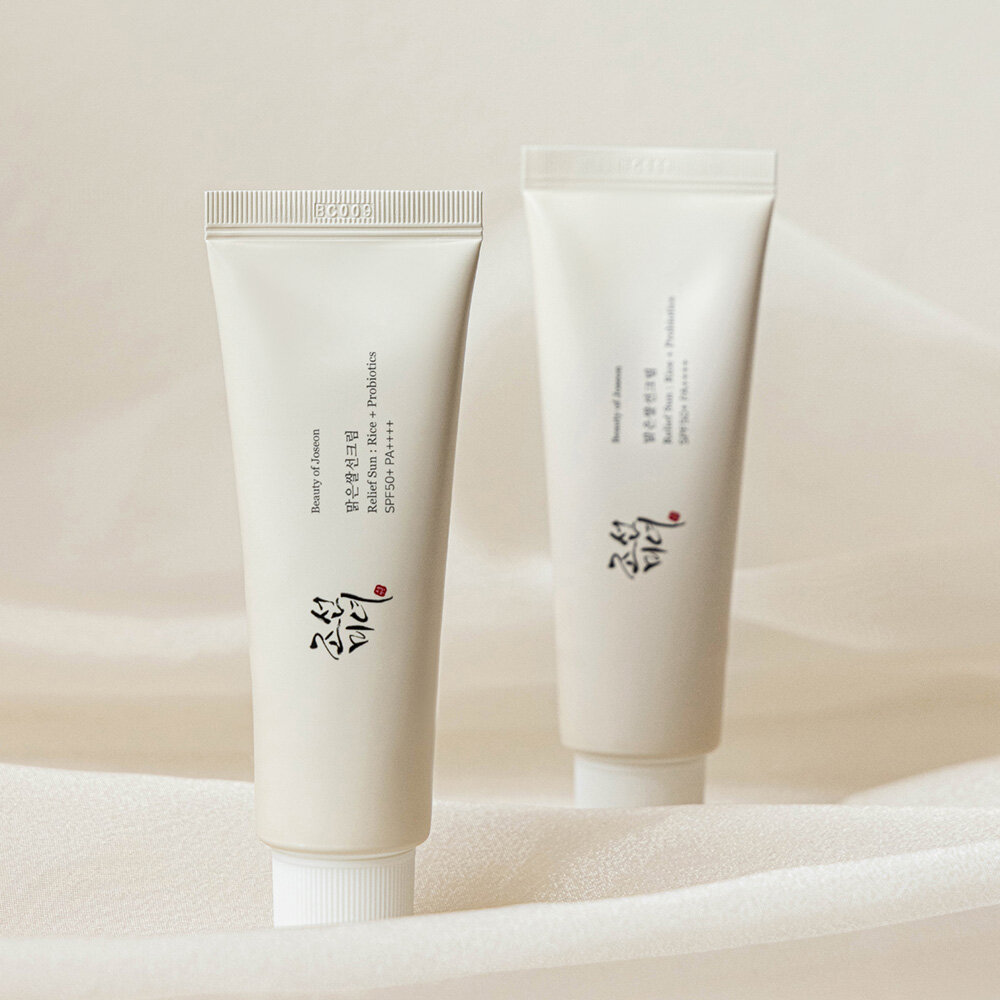
- Best overall: Beauty of Joseon Relief Sun Rice + Probiotics SPF50+ PA++++ — dewy, no white cast, antioxidant-rich
- Best invisible finish: COSRX Ultra Light Invisible Sunscreen SPF50+ PA++++ — serum-like, aloe + witch hazel, zero white cast
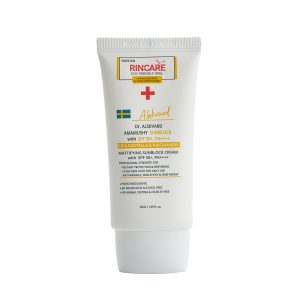
- Best for sensitive skin: AMAMUSHY Hypoallergenic Derma Sunblock SPF50+ PA++++ — cica + niacinamide, noncomedogenic, mattifying
- Every Korean sunscreen you’ll find in Sam Konneh’s wholesale catalog carries PA++++ as the default — that’s the UVA shield your SPF number doesn’t tell you about.
A common myth among Western buyers of Korean sunscreen: if it doesn’t sting your eyes, it’s not working. Stinging is a sign of a problem, not a feature.
Korean sunscreen technology ran ahead of the rest of the world while most of us were still rubbing white zinc paste onto our faces. The result is something wholly different — water-light fluids, skincare-packed gels, and actives that actually enjoy being under sunlight.
This sunscreen guide covers the PA rating most Western listings skip and the filter technology that makes Korean SPF feel like a serum, along with specific formulas.
If you’re importing for a shop or you’re simply tired of sunscreens that fight your skin tone, this is your sheet.
![[COSRX] Ultra Light Invisible Sunscreen 50ml – image 2](https://kbeautycontent.com/wp-content/uploads/2026/06/aa8863b1-d869-40cc-96a2-dfe53c9c5558-2-300x300.jpg)
![[COSRX] Ultra Light Invisible Sunscreen 50ml](https://kbeautycontent.com/wp-content/uploads/2026/06/914e62de-3f4f-473c-b8a2-9c0e2892e70c-2-300x300.jpg)
The PA Rating: What Most Guides Don’t Explain
Every genuine Korean sunscreen shows two values — SPF and PA. SPF gets the attention. PA does the work Western shoppers don’t know they’re missing.
SPF (Sun Protection Factor) quantifies UVB defense — the ray that burns skin, damages DNA directly, and makes a sunburn hard to forget. SPF 50 already blocks about 98% of UVB. After 50, the increments shrink toward cosmetic margins.
PA (Protection Grade of UVA) addresses the part of the spectrum that ages skin. UVA penetrates deeper than UVB, passes through window glass, and drives hyperpigmentation, collagen loss, and the kind of stubborn tan that cosmetic clients visit estheticians to undo. The Korean system uses plus signs:
- PA+ — some UVA protection
- PA++ — moderate UVA protection
- PA+++ — high UVA protection
- PA++++ — extremely high UVA protection
For daily wear, PA++++ is the standard to look for. UVA is the silent operator. It doesn’t announce itself with a burn. It just works your skin like compound interest over decades, and the interest rate adjusts with your latitude.
That’s why PA++++ reads like a minimum specification on a spec sheet — not a premium upgrade.
Check the PA rating as well as the SPF. A sunscreen with a mismatched PA rating may not protect against the pigmentation side of sun damage.
The African and GCC markets drive reorders by how well a sunscreen stops dark spots from deepening — not by whether it prevents a sunburn that rarely shows on melanin-rich skin.
Why Korean Sunscreens Feel Different: The UV Filter Gap
Korean laboratories have access to UV filters the FDA still hasn’t approved for American formulators.
Tinosorb S, Tinosorb M, Uvinul A Plus, Mexoryl SX, and Mexoryl XL — these five names explain why Korean sunscreen disappears into skin like a moisturizer while American alternatives often sit on top like a chalky memory.
The FDA moves slower than a drying gel moisturizer. Meanwhile, Korean labs have been formulating with these modern filters longer than TikTok has existed, producing stable, broad-spectrum protection that doesn’t degrade within an hour of sun exposure.
American sunscreens are largely locked into oxybenzone, avobenzone, and octinoxate — older molecules that spike irritation rates and produce the heavy, greasy textures most Americans associate with sunscreen as a chore.
The functional difference isn’t marketing. Avobenzone photodegrades as it absorbs UVA, requiring stabilizers. Tinosorb S and Uvinul A Plus remain stable after hours of exposure. That means the protection stays linear across a day, not a cliff that drops off after lunch.
For darker skin tones especially, where UVA protection matters more than UVB for hyperpigmentation, this is the difference between a sunscreen that just sits on the shelf and one that actually moves off it.
Modern Korean sunscreens typically use at least two of these modern filters in combination with traditional UVB absorbers. The result is a formula that feels watery or gel-like, never greasy, and rarely requires a separate moisturizer underneath.
Sunscreen Types: Choosing Your Texture
“Weightless” means different things to different skin. In humid climates, it can mean the sunscreen doesn’t slide off by 11 a.m.
For combination skin that rebels against heavy SPF, it means forgetting you applied it by the time you get to the office. The sunscreens that earn repeat use on both of those measures tend to fall into just a few texture families.
| Type | Finish | Best Skin Type | White Cast Risk |
|---|---|---|---|
| Watery essence / fluid | Dewy, skin-like | Dry, normal, combination | Very low (chemical filters) |
| Lightweight gel | Natural to matte | Oily, combination, acne-prone | Low (chemical filters) |
| Milk / lotion | Natural, semi-matte | All skin types; versatile | Low (usually chemical) |
| Mineral / physical | Matte; can look powdery | Sensitive, post-procedure, reactive | Higher (zinc oxide/titanium) |
| Hybrid (chemical + mineral) | Natural, some glow | Sensitive-ish, combination | Low-medium (depends on zinc %) |
Hybrid and watery essence textures are the broadest fit across hot, humid climates: they vanish on skin without a fight. Mineral-only lines are a harder sell — no matter the brand, the chalky cast on deep skin triggers returns.
The few mineral SPFs worth considering are tinted Korean formulations designed to minimize the ghosting.
Top Korean Sunscreens 2026
Best Overall: Beauty of Joseon Relief Sun Rice + Probiotics SPF50+ PA++++
This one is ubiquitous. A rice-based, probiotic-lysate formula supplies antioxidant support and a gentle brightening that shows up in before-and-afters after a few weeks, while niacinamide evens tone alongside it.
The texture is a milky fluid that dries to a dewy, skin-like finish — not greasy, not matte. On deep skin tones it disappears: no purple tint, no chalk. At around $16 for 50ml, everyday use is realistic, not aspirational.
Best Invisible Finish: COSRX Ultra Light Invisible Sunscreen SPF50+ PA++++
The name is the whole pitch: it goes on invisible. A serum-like fluid that absorbs in seconds and leaves no cast, no heavy film — the profile shoppers in hot, coastal climates look for. Aloe and witch hazel keep the finish calm rather than tight.
For oily and combination skin it behaves the way a good essence does: it sinks in and stays put through a humid morning. At $14 it is also the easiest “yes” on the sheet for a first-time Korean-SPF buyer who previously rejected sunscreen for feeling too heavy.
Best for Sensitive Skin: AMAMUSHY Hypoallergenic Derma Sunblock SPF50+ PA++++
This one is built for reactive skin from the label in: hypoallergenic, noncomedogenic, pH-balanced, and alcohol-free, with cica (centella) and niacinamide doing the soothing-and-tone work. The finish is mattifying and non-greasy — a sensible default for clients whose barriers reject most topicals.
That combination suits post-procedure or derma-sensitive skin that still needs daily protection it can actually tolerate. No fragrance drama, no sting, no shine.
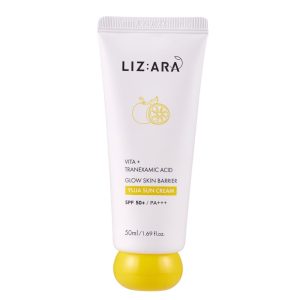
Best Hydrating: LIZARA Glow Skin Barrier Yuja Sun Cream SPF50+ PA++++
A daily sun cream themed around yuja (Korean citron) and barrier comfort. It wears easily and leaves a glowing, conditioned finish rather than a flat matte — the kind of dew that reads as hydrated skin, not oily skin. For dry skin in arid GCC climates it earns its place as a moisturize-and-protect step in one.
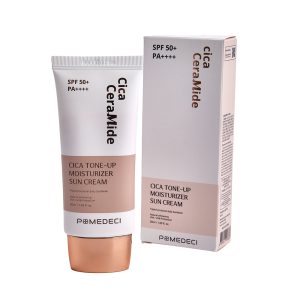
Best Budget: Cica Ceramide Tone-up Sunscreen SPF50+ PA++++
The value pick at $8.80. Cica calms, ceramide reinforces the barrier, and the tone-up finish gives skin a light, even brightness out of the tube. It is a good budget option under ten dollars.
A note on shade: tone-up formulas carry a faint brightening tint, so on the deepest skin tones the invisible picks above are the better choice. Keep this one as the budget-and-barrier option.
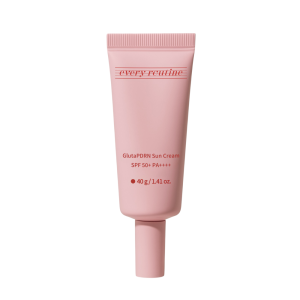
Best for Brightening: every routine GlutaPDRN Sun Cream SPF50+ PA++++
Glutathione and PDRN headline this daily sun cream — the brightening-and-recovery angle wrapped around broad-spectrum protection. It is the pick if your first concern is uneven tone and dark marks rather than shine or dryness.
It rounds out the range at $15 and gives a retailer a clear “brightening” peg on the shelf next to the overall, invisible, sensitive, hydrating, and budget picks.
Korean Sunscreens on Darker Skin Tones
On deep skin that is prone to post-inflammatory hyperpigmentation, the white-cast question stops being cosmetic. It becomes a compliance issue. If a sunscreen leaves a violet residue, no one applies the full quarter-teaspoon.
That means they’re getting sub-rated protection, and the UVA shield they need against dark marks isn’t even fully deployed. Chemical-filter Korean sunscreens solve that cleanly.
The Beauty of Joseon Relief Sun, COSRX Ultra Light Invisible, and LIZARA Yuja Sun Cream stand out for exactly this reason — a light, clear dry-down on deep skin tones with no chalky ghost. Their serum-and-cream textures sink in instead of sitting on top, so the full quarter-teaspoon actually gets applied.
Where mineral protection becomes necessary — after a laser procedure, during a retinization phase, when skin is too reactive for chemical filters — Korean brands have partially engineered around the problem. Tinted physical formulas exist, using micronized zinc and iron oxides to offset the cast.
They’re not invisible like the chemical alternatives, but they’re the closest the lab has gotten so far. Treat tinted mineral options as a post-treatment recommendation, not a daily driver.
Lagos retailers reorder Beauty of Joseon the most — the rice-based glow fits the humid-but-not-oily expectation of the local customer. GCC buyers lean on the COSRX invisible finish in desert heat, then stock the AMAMUSHY hypoallergenic sunblock heavily during the post-Ramadan spending spike when sensitivities peak.
Shop This Guide
Every sunscreen here is in stock in Sam Konneh’s Seoul-sourced wholesale catalog. Price, sale status, and stock update live — no stale numbers, no dead links.
Frequently Asked Questions
Why do Korean sunscreens feel so different from American ones?
Korean formulators use modern UV filters like Tinosorb S and Uvinul A Plus, which create lighter textures and remain photostable over hours. American manufacturers are still largely restricted to oxybenzone and avobenzone — older filters that require heavier bases to stabilize them. That’s the gap in a sentence.
What does PA++++ mean on a Korean sunscreen?
PA measures UVA protection — the aging and pigmentation side of the equation. PA++++ is the highest possible designation, indicating protection that withstands real-world, full-day wear. SPF, by itself, tells you almost nothing about UVA coverage.
Is SPF 50 enough, or do I need SPF 100?
SPF 50 blocks about 98% of UVB. SPF 100 bumps that to roughly 99% in lab conditions. The real-world gain is marginal, and SPF 100 formulas often sacrifice texture. A well-applied PA++++ SPF 50 will outperform a poorly applied SPF 100 every time. Focus on reapplication, not the top-line number.
Can Korean sunscreen replace moisturizer?
For oily and combination skin, the serum-like COSRX Ultra Light Invisible often provide sufficient hydration. For dry skin or arid climates, layer a light toner or serum first; the LIZARA Yuja Glow Skin Barrier Sun Cream is specifically formulated to serve as both for normal-to-dry types.
How much Korean sunscreen should I apply?
The test standard is 2mg/cm² — about a quarter-teaspoon for the face alone. In practice, the two-finger rule (squeeze a line along two fingers) gets most people within 80% of that.
Many people apply sunscreen like they’re seasoning a steak — just enough to signal they tried, not enough to matter. A generous application and one midday reapplication transform protection numbers from theoretical to actual.
“Barrier health should always come before active ingredients. If your barrier is compromised, nothing else matters.”
Importing Korean Sunscreen: Wholesale Options from Sam Konneh
The sunscreens ranked above — Beauty of Joseon Relief Sun, COSRX Ultra Light Invisible, AMAMUSHY Hypoallergenic Derma Sunblock, LIZARA Yuja Glow Skin Barrier, Cica Ceramide Tone-up, and every routine GlutaPDRN — are sourced directly from Seoul and available in wholesale volumes for retailers across Africa, the GCC, and Southeast Asia.
Every unit ships with verified PA ratings, date-of-manufacture batch codes, and a chain of custody that starts on the factory floor. No counterfeits, no marketplace resellers, no “may have separated” refund requests.
Last updated: April 2026