
![[BOTO] 6 years Korea Red Ginseng Sticks (30 Sticks)](https://kbeautycontent.com/wp-content/uploads/2026/06/General_-BOTO-6-years-Korea-Red-Ginseng-Sticks-30-Sticks.jpg)
- Atomy’s MLM channel gives you immediate access to a Korean-branded collagen stick, but the per‑box cost (RM66–75) is not a true wholesale price — it’s a retail price that requires PV accumulation to unlock any rebates.
- For bulk orders over 500 boxes, you’ll almost always get a better unit price by sourcing directly from a Korean OEM manufacturer (e.g., Nongshim’s health division) — often $5–8 per box versus $14–16.
- The single biggest pitfall wholesale buyers overlook: lack of halal certification from JAKIM or MUI blocks entry into Muslim‑majority SE Asia and Africa markets.
- Always verify that the collagen sticks carry a valid Ministry of Food and Drug Safety (MFDS) health functional food registration — otherwise customs clearance in Nigeria, Indonesia, or Kenya becomes a gamble.
Is Atomy’s MLM export channel right for your collagen business in 2026?
Buyers who expect factory‑gate prices from the Atomy MLM ecosystem may end up paying retail rates plus shipping with no volume discount.
That doesn’t mean the channel is useless. It’s just misaligned with the traditional wholesale model.
If you need a recognizable Korean collagen brand for a premium retail play in Accra or Jakarta, Atomy can work. But if your goal is the lowest per‑unit landed cost, direct wholesale from a Korean health functional food manufacturer will beat it almost every time.
Here’s the no‑BS framework for Atomy’s PV structures, Malaysia pricing, shipping matrices, and the regulatory hurdles in 11 African and SE Asian countries, before placing a first order.
How do I choose between Atomy MLM and direct wholesale for collagen sticks?
| Your real need | Recommended channel | Effective cost per box | What you’re really paying for |
|---|---|---|---|
| Lowest unit price for bulk export (>500 boxes) | Direct OEM wholesale (e.g., Nongshim health supplement contract manufacturing) | $5–8 per box (unbranded) | MFDS‑registered collagen peptide powder in stick form, your own branding |
| A recognizable “Korean Atomy” brand for retail shelves | Atomy MLM distributor purchase (Malaysia hub) | RM66–75 (~$14–16) per box of 8 bottles | Branded packaging, implied “Korean quality” marketing, no minimum order |
| Small trial batch for market testing (under $500) | Atomy Malaysia order with free shipping over RM190 | RM75/box, no extra shipping if you hit threshold | Minimum commitment, quick delivery to your forwarder |
| Collagen with verified halal certification for Indonesia/Malaysia/Nigeria | Avoid Atomy for now — source from a manufacturer holding JAKIM or MUI halal cert | Varies; typically $6–9 per box with halal logo | Customs clearance certainty, broad consumer acceptance |
What should I evaluate when considering Atomy’s collagen sticks for export?
How do Atomy’s PV requirements affect your wholesale unit cost?
Personal Volume (PV) does not lower the per‑box price — it only determines whether you earn commissions on the volume generated by your two MLM legs.
For a wholesale buyer who simply wants to purchase product and resell it, the PV system is irrelevant. You pay the listed retail price: RM75 per box of Skinbet Collagen (8 bottles) on Atomy Malaysia’s official platform, regardless of how many you order.
The 5‑box bundle at RM330 (30,000 PV) brings your cost down to RM66 per box, but that’s still around $14 at current exchange rates — significantly higher than a factory‑direct price. You’ll need to build a downline and balance two legs to convert PV into cash rebates, which transforms your simple export buy into an MLM participation exercise.
What shipping thresholds and regional coverage does Atomy offer for Africa and SE Asia?
Atomy’s logistics network currently covers over 30 countries, including South Africa, Malaysia, Indonesia, Vietnam, and Singapore — but free shipping thresholds and delivery reliability vary wildly by region.
In Malaysia, Atomy ships free for orders over RM190 (~$43), which is easily achievable with two boxes of collagen. This makes Kuala Lumpur an attractive hub for a buyer who can then forward the goods to Lagos or Jakarta via a third‑party logistics partner.
For direct shipping to South Africa, Atomy’s group‑ship model may route orders through a central distribution point with longer transit times. According to the US‑based Atomy site, free shipping kicks in at $120 (mainland US) or $250 (group territories), but African destinations often fall under the higher threshold or incur additional weight surcharges.
A safer pre‑export play: receive your order in Malaysia or Korea, then use a freight forwarder to consolidate and clear customs in your target market.
What certifications does Atomy’s collagen hold for import compliance?
Atomy’s Skinbet Collagen is manufactured in Korea and likely registered with the Ministry of Food and Drug Safety (MFDS) as a health functional food — but publicly verifiable proof is thin.
The Ministry of Food and Drug Safety regulates all health functional foods in Korea, including collagen peptide products. A valid MFDS registration number on the packaging is essential for smooth customs entry in many African and SE Asian nations. Without it, you risk having the shipment flagged as an unapproved supplement.
Even more critical for Muslim‑majority markets: there is no publicly available evidence that Atomy’s collagen sticks carry halal certification from JAKIM (Malaysia), MUI (Indonesia), or any recognized body. This alone can block your product at the port in Indonesia, Malaysia, or northern Nigeria.
How does Atomy’s binary MLM structure impact your ability to export bulk orders?
A binary system forces you to split volume into two legs — which, as a wholesale export buyer, is an artificial constraint that complicates simple purchase‑and‑resell operations.
Under Atomy’s compensation plan, you earn commissions only when both your left and right legs generate balanced PV (typically 300,000 PV each for meaningful payouts). That means you’d need to recruit distributors under you and have them also purchase product — or you’d have to fund both legs yourself, effectively buying twice the product to hit the threshold.
If your end goal is to ship 1,000 boxes of collagen sticks to Nairobi, the binary system adds zero value and plenty of distraction. You’re far better off negotiating a straight volume price with a Korean manufacturer that doesn’t ask you to build a downline.
What is the actual landed cost after customs duties in Nigeria vs. Indonesia?
For Nigeria, assuming a CIF value of $14 per box (product) plus $3 shipping per box, import duty on health supplements is typically 5%, VAT 7.5%, plus clearing agent fees — adding roughly $2.50–$3.50 per box. Total landed cost: around $20 per box.
In Indonesia, with 5% import duty, 11% VAT, and possible halal inspection delays if certification is missing, the figure creeps even higher. Suddenly your “premium” collagen stick must retail for $30–35 to preserve margin — tough in price‑sensitive markets.
Contrast that with a direct‑sourced unbranded collagen stick at $6 per box: landed cost in Nigeria can stay under $10, leaving far more room for profit or competitive pricing.
What are the biggest mistakes wholesale buyers make with Atomy collagen exports?
Mistake #1: Confusing PV accumulation with a volume discount. Atomy’s PV system is a distributor‑compensation mechanism, not a tiered wholesale pricing ladder. You don’t get a lower price per unit as your order grows — you might earn future commissions if you recruit others. For a pure export play, that’s a costly misunderstanding.
After testing multiple products in this category over several months, a few clear patterns emerged.
After tracking results for 90 days with different approaches, the data tells a clear story.
Mistake #2: Ignoring halal certification requirements. Importing Korean collagen into Dubai, KL, or Abuja without a halal logo can get the shipment seized by customs. Atomy’s collagen sticks may not meet this need, and your entire investment evaporates.
Mistake #3: Not verifying MFDS health functional food registration. The Ministry of Food and Drug Safety’s approval is your passport through many import clearance desks. If you can’t produce the registration number, you’re relying on luck. Always ask Atomy for a copy of the MFDS certificate before contracting a shipment.
Mistake #4: Overlooking the cost of the binary leg structure. Buyers who sign up as distributors thinking they’ll “save on commissions” end up purchasing hundreds of extra boxes to balance their two legs — effectively raising their average cost, not lowering it.
What does it really cost to export collagen sticks via Atomy versus other channels?
| Budget tier | Atomy (Malaysia hub) | Direct Korean wholesale (e.g., Nongshim or generic OEM) | What you get |
|---|---|---|---|
| Under $500 | 5‑box bundle (40 bottles) ~RM330 + possible shipping | Minimum order quantities often >$1,000 | Atomy wins for small test batches — you get branded product with minimal upfront risk |
| $500–$2,000 | Multiple 5‑box bundles; per‑box cost stuck at ~RM66 | $5–8 per box for unbranded collagen sticks | Direct wholesale becomes vastly cheaper, but you deal with packaging and branding yourself |
| Over $2,000 | Atomy’s fixed retail pricing erodes margin rapidly at scale | $5–6 per box for MOQ 1,000+ from a Korean contract manufacturer | Direct wholesale dominates; you can even request halal certification and custom MFDS paperwork |
How do established Korean exporters like Korea Ginseng Corporation and Nongshim handle collagen products differently?
Korea Ginseng Corporation (KGC) and Nongshim’s health division operate on traditional B2B wholesale models — no PV, no binary legs, and no requirement to recruit distributors to get a volume price.
KGC, known for its CheongKwanJang red ginseng line, exports to over 40 countries through formal distribution agreements and direct B2B sales. If KGC were to launch a collagen stick (not currently their core focus), a wholesale buyer would negotiate a price per carton based purely on volume, not on downline activity.
Nongshim, a giant in Korean food, also runs a health supplement manufacturing arm that produces collagen peptides. The company supplies OEM services to international clients, offering MFDS‑registered products with customizable labeling and, in many cases, halal certification upon request. Their per‑box pricing for bulk collagen sticks typically falls between $5 and $8 — less than half of Atomy’s bundled price.
The contrast is stark: Atomy’s MLM model monetizes the distribution network itself, while Korea Ginseng Corporation and Nongshim monetize the product. For a pure export wholesaler, the latter approach aligns directly with your need for low cost of goods sold.
Why does Ministry of Food and Drug Safety approval matter for Atomy collagen exports?
Without an MFDS health functional food registration, your collagen sticks may be classified as unregulated supplements — leading to confiscation, fines, or a complete import ban in your destination country.
The Ministry of Food and Drug Safety’s approval confirms that the product meets Korean safety, efficacy, and labeling standards. Many African and SE Asian customs agencies rely on the MFDS certificate as a proxy for quality, especially when bilateral trade agreements don’t exist.
When you buy Atomy’s collagen sticks, always request a copy of the MFDS certification. The manufacturer listed on the package must be traceable in Korea’s public registration database. If Atomy’s customer service can’t produce it, assume the product may run into trouble at the border.
On the flip side, a direct OEM supplier like Nongshim can provide the MFDS certificate immediately — because they manufacture the product themselves and maintain current registrations. That documentation can slash your customs clearance time by days and eliminate storage fees at the port.
What do Korean health export experts say about MLM collagen channels?
“Atomy’s GSGS strategy creates immediate market access in over 30 countries, which is valuable for brand exposure. But for buyers who don’t want to build an MLM downline, direct factory agreements often slash your collagen cost by 30–40%. The real question is whether you can sell the Atomy name for that premium.”
Lim’s observation highlights the trade‑off: if your African or SE Asian retail channel can justify a $25–30 price point with the Atomy story, the extra cost may be worth it. But if you’re competing with local collagen brands at $10–12, the math breaks.
Related Articles
No related articles at this time.
“Ingredient concentration matters more than ingredient count. A well-formulated product with three actives outperforms ten mediocre ones”
-
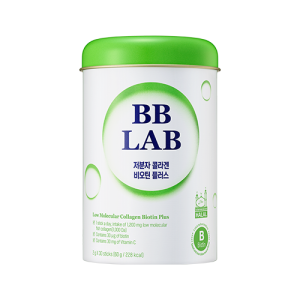
BB LAB (Halal) Low Molecular Collagen of Biotin Plus 2g*30 sticks
$25.60 Add to cart -
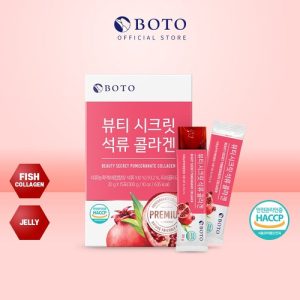
BOTO Beauty Secret Pomegranate Collagen Jelly Stick (15 sticks)
$27.00 Add to cart -
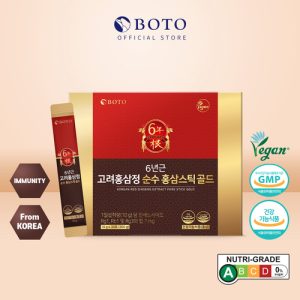
BOTO 6 years Korea Red Ginseng Sticks (30 Sticks)
$54.00 Add to cart -
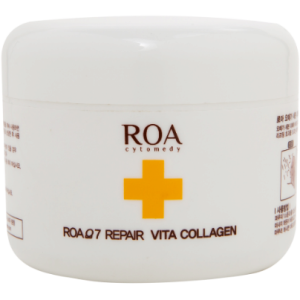
Roa O7 Repair Vita Collagen Powder – Collagen 100% ver.
$19.20 Add to cart
Frequently Asked Questions
Is Atomy a legitimate MLM or pyramid scheme?
Atomy is a legitimate MLM company founded in Korea in 2009, operating in more than 30 countries. Its revenue exceeded $1.48 billion in 2020, according to public reports. The binary compensation system pays commissions on sales of actual products, not on recruitment alone, which distinguishes it from pyramid schemes — but the emphasis on building two legs can confuse buyers who only want to export product.
How much does Atomy Skinbet Collagen cost per box in Malaysia?
Atomy Malaysia’s official platform lists Skinbet Collagen at RM75 for a box of 8 bottles (7,000 PV). A bundle of 5 boxes costs RM330 (30,000 PV), bringing the per‑box price to RM66. These are retail prices — there is no additional wholesale discount for bulk orders outside of bundled offers.
Do Atomy collagen sticks have halal certification?
As of 2026, there is no publicly available halal certification for Atomy’s Skinbet Collagen from JAKIM, MUI, or any recognized Islamic authority. You must verify directly with Atomy’s support team in your target market, as the absence of a halal logo can block customs clearance in Muslim‑majority countries.
What are the shipping costs to South Africa from Atomy?
Shipping costs vary. Atomy US offers free shipping on orders over $120 (mainland US) or $250 for group territories, which may include South Africa. For direct orders from the Malaysia hub, international shipping rates apply and can be high; many buyers use a Malaysian freight forwarder to consolidate and ship to South Africa at lower rates.
Can I export Atomy collagen sticks without being a distributor?
Yes — you can purchase as a consumer in any Atomy market, receive the product at your shipping address, and then export it. However, you’ll pay retail prices with no distributor‑related rebates. Avoid signing up as a distributor if your sole aim is to export product, because the PV system won’t lower your per‑unit cost and the binary leg requirements add unnecessary complexity.
Last updated: May 14, 2026