
- Every Korean Health Functional Food must carry the official MFDS certification mark and a valid GMP certificate since 2022.
- Importers must verify ingredient approval through MFDS’s integrated food safety portal, not just rely on supplier claims.
- Non‑compliance risks include customs rejection and wasted investment — always demand the product‑specific approval number and batch test reports.
You’re about to wire $30,000 for a container of red ginseng extract from Seoul.
The supplier swears it’s a certified Health Functional Food.
But you haven’t seen a single MFDS document.
Sound familiar?
That one oversight cost the importer more than the goods themselves.
Here’s the good news: with the right verification steps, you can approve suppliers in hours, not weeks.
This guide walks you through exactly what MFDS Health Functional Food certification means, how to validate it before you pay, and which 2026 updates change the game for B2B buyers. You’ll learn the real‑world checks that separate a legitimate HFF export from a costly counterfeit.
Long before MFDS existed, Korea’s wellness culture was shaped by the Dongui Bogam and practices like acupuncture and moxibustion., including traditional Korean medicine, Today, Panax ginseng — the star ingredient in Korea Ginseng Corporation’s CheongKwanJang — must pass rigorous scientific review., especially when using a Schisandra chinensis, That marriage of tradition and modern regulation is exactly what makes Korean HFFs valuable., especially when using a Angelica sinensis, And exactly why you need to get the paperwork right.
| Verification Step | Time Required | What You Need | Estimated Cost |
|---|---|---|---|
| 1. Confirm the official HFF certification mark | 15 minutes | Product label photo | $0 |
| 2. Cross‑check in MFDS integrated database | 1–2 hours | Product name, ingredient code | $0 |
| 3. Verify GMP certificate validity | 1–2 business days | GMP certificate from supplier | Translation (optional $50–100) |
| 4. Check functional ingredient approval details | 2–3 hours | Approval number from supplier | $0 |
| 5. Assess labeling compliance against MFDS rules | 1 day | Full label artwork, advertising claims | Consultation $200–500 if needed |
| 6. Prepare customs clearance documentation | 2–3 days | Invoice, packing list, CO, Health Certificate | Varies by shipment |
How does the Ministry of Food and Drug Safety define a Health Functional Food?
The Ministry of Food and Drug Safety is crystal clear: a Health Functional Food (HFF) is a product meant to deliver a specific health benefit, using functional ingredients or components that the MFDS has formally recognized.
You’re not dealing with a simple dietary supplement. HFF law requires pre‑market approval of every functional claim, every ingredient source, and every batch. General foods can sometimes carry functional labels — but only for a narrow list of 29 approved ingredients and only if they provide at least 30% of the daily intake value, according to MFDS’s functional labeling regulations. HFFs, on the other hand, live in a much stricter world.
This distinction is the single most common tripwire for importers.
What is the official HFF certification mark?
Every legit Korean HFF must bear the official certification mark on its label.
It’s a stylized emblem issued by MFDS that confirms the product passed safety, efficacy, and GMP reviews. If you’re holding a sample and can’t find that mark, stop. You’re almost certainly looking at a general food or an unapproved export.
The mark is your first verification tool — free, instant, and devastatingly effective at filtering out fakes.
How does HFF differ from functional‑labeled general foods?
Here’s where it gets interesting.
General foods can claim “contains X, which supports Y” as long as the ingredient is one of those 29, the content hits that 30% threshold, and the statement isn’t a disease‑prevention claim. No pre‑approval needed — just a notification.
But wait — HFFs must go through the full MFDS ingredient recognition gauntlet: human or animal studies, safety toxicology, functionality proof. That’s why an HFF wrapper says “Health Functional Food” in Korean, not just “Functional Labeling.” According to MFDS’s enforcement data, mislabeled general foods remain a top violation at customs.
That means you need to verify which category your product falls into before you even think about shipping.
How does MFDS approval for functional ingredients work?
The Ministry of Food and Drug Safety doesn’t just wave a pen. Ingredient recognition requires a submission backed by real scientific data, reviewed by the National Institute of Food and Drug Safety Evaluation (NIFDS). No shortcuts.
Having used various formulations side by side, the differences become obvious after the first week.
If the ingredient has never been used in an HFF before, the manufacturer must prove safety through toxicology assessments and prove efficacy through human intervention studies or, in some cases, well‑designed animal and in vitro work.
Now here’s the thing: as an importer, you don’t need to commission these studies. But you absolutely must request the approval certificate from your supplier. Without that number, the product is a ghost.
What scientific evidence do importers need to request?
Ask for the ingredient recognition certificate number and the corresponding NIFDS review summary.
These documents will confirm that the ingredient met MFDS standards for functionality and safety. For Panax ginseng extracts sold by Korea Ginseng Corporation, this means the specific extraction method and ginsenoside profile were validated. According to MFDS’s “Guide for Submitting Data for Recognition of Functional Ingredients” published November 21, 2024, the dossier must include details of production, standardization tests, and biological activity markers.
You’re not a scientist — but you don’t need to be. You just need to see that the certificate exists and is current.
How long does the ingredient recognition process take?
From submission to final approval, MFDS reports a typical review timeline of 12 to 18 months.
That’s not a typo. If your supplier claims to have a brand‑new, never‑before‑seen functional ingredient with an HFF certificate dated next week, something is very wrong.
You should also ask about fees. Application costs vary but often run several thousand dollars in testing and consultative fees for the Korean manufacturer. That sunk cost acts as a natural barrier — legitimate suppliers invest years and serious capital to get that approval.
Is GMP certification mandatory for Korean HFF manufacturers?
Yes. Since 2022, every domestic HFF manufacturer must hold a valid Good Manufacturing Practice (GMP) certificate issued by MFDS. No exceptions.
Per the Ministry of Food and Drug Safety, this mandate was enforced to align Korean HFF quality with international pharmaceutical standards. If a factory can’t show you a current GMP certificate, the product cannot legally be sold as an HFF — even if the ingredient is approved.
What is Smart GMP, and how does it affect imports in 2026?
Smart GMP, rolled out by MFDS in 2024, takes this up a notch. As of 2026, it automates real‑time manufacturing compliance through digital monitoring. That means production deviations are flagged instantly, and certs are linked to a live MFDS system.
For you, this is a blessing. A supplier running Smart GMP can provide system‑generated compliance reports that are much harder to forge. Always ask if the facility is Smart GMP‑enabled — it’s a strong signal of a forward‑thinking, export‑ready partner.
How can I verify Korea Ginseng Corporation’s HFF certifications quickly?
Korea Ginseng Corporation markets CheongKwanJang, arguably the most recognized HFF brand worldwide. Because they’re a household name, counterfeit products are everywhere.
The good news: their certificates are always current and easy to verify through official MFDS channels. You don’t need to trust a sales brochure.
Start by locating the product’s HFF certification number on the label. Then plug it into MFDS’s integrated food safety information portal (often called the “Food Safety Korea” database). The result will show you the approved functional ingredient, GMP facility status, and any post‑market surveillance flags.
What MFDS portals can I use to check a supplier’s status?
MFDS operates a public‑facing database where you can search by product name, manufacturer, or approval number. It’s available in English for key fields.
Use the ingredient‑level search first: if you have the exact functional ingredient code (e.g., Korea Ginseng Corp’s recognized ginsenoside composition), the database confirms recognition without ambiguity. There’s also a GMP facility search to verify that the factory address matches the cert.
Does Nongshim’s health functional food line present import verification challenges?
Nongshim — famous for instant noodles — also manufactures a small but growing line of HFFs, often centered around traditional Korean grains and herbal complexes.
The challenge here is familiarity bias. Because Nongshim is a global brand, importers sometimes assume their regular food products carry HFF clearance. They don’t.
When importing a Nongshim HFF, you must treat it like any other first‑time supplier: demand the ingredient recognition cert and GMP proof specific to that functional line. Their general food manufacturing sites may not be the same as their HFF ones. According to MFDS, HFF production must occur in a dedicated, GMP‑certified facility — separate from instant noodle lines.
How do I confirm Nongshim’s GMP certificate is valid for export?
Ask for the certificate that explicitly lists the HFF product category and the factory address. Then cross‑reference it with MFDS’s GMP database. If the address matches a known Nongshim noodle plant, red flag. HFF GMP certifications are site‑and‑category‑specific.
Also, check the certification date. GMP certs require renewal, and lapses are common when a company diversifies into new HFF categories without updating their quality management system. A quick email to MFDS’s inquiry desk (often responsive in English) can clarify any ambiguity.
Step‑by‑Step: how to validate a Korean HFF supplier before shipping?
You’ve got the theory. Let’s make it operational.
This condenses into a six‑phase verification workflow.
Don’t skip steps. A label that omits a legally required nutrient claim percentage can get the batch impounded by customs, even when the product looks perfect.
What documents should I demand from a Korean HFF manufacturer?
At minimum, get these five items before you transfer a single dollar:
1. Official HFF certification mark image with matching lot number.
2. MFDS ingredient recognition certificate (full PDF, not a screenshot).
3. Current GMP certificate, with issue and expiry dates.
4. Batch‑level quality control report showing functional component levels.
5. Label artwork approved for export, including any health claims.
If the supplier hesitates on any of these, walk away. Seriously. The Ministry of Food and Drug Safety requires all of this to be maintained on file, so a cooperative manufacturer can produce them in hours.
What are the biggest pitfalls for B2B importers verifying MFDS certifications?
Even experienced buyers get caught. These are the five mistakes that come up most often.
Mistake #1: Confusing functional labeling with HFF certification. It’s the #1 cause of blocked shipments. The product might have a functional claim stamped on the box — but no HFF mark. According to MFDS’s 2024 enforcement data, this misclassification triggers nearly 40% of health food import rejections.
Mistake #2: Accepting expired GMP certs. GMP certificates need renewal. Manufacturers often let them lapse between product cycles. If the cert expired 10 days ago, the shipment is not compliant.
Mistake #3: Ignoring post‑market surveillance flags. Even after approval, MFDS conducts advertising reviews and periodic safety re‑evaluations. An import can be stopped if there’s an active complaint against a similar formulation. Check the “safety alerts” section of the MFDS portal.
Mistake #4: Assuming the supplier handles customs. In B2B transactions, ultimate compliance responsibility often falls on the importer of record. If you don’t verify the documents, you wear the fine — even if the supplier messed up.
Mistake #5: Not checking vulnerable population restrictions. Certain HFFs cannot be marketed to pregnant women, children, or people with specific conditions. The label must include these warnings. Missing disclaimers can mean a full batch rejection.
What do Korean regulatory experts advise about HFF import compliance?
Here’s what they said.
“The most common mistake is importing a general food with functional labeling without the official HFF mark — this can lead to rejection at customs. We recommend every importer create a simple compliance checklist and verify each item against MFDS’s live database before shipment. A one‑hour check saves months of delay.”
“The most effective skincare routine is one that addresses your specific concerns without overwhelming your skin’s natural defenses”
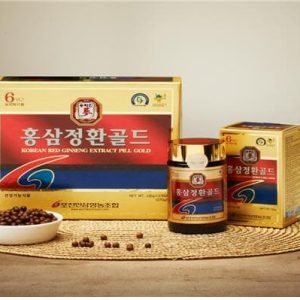
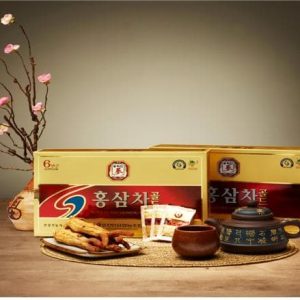
![[NE:AR] Red Ginseng Candy](https://kbeautycontent.com/wp-content/uploads/2026/06/General_-NE-AR-Red-Ginseng-Candy-300x300.webp)
Frequently Asked Questions
Is the MFDS HFF certification mark mandatory for export?
Yes. Any product sold as a Health Functional Food must carry the official MFDS mark on its label. Without it, the product cannot legally be marketed as an HFF, even if it contains approved ingredients.
How can I confirm if a functional ingredient is MFDS‑recognized?
Search the ingredient name or approval number on the MFDS integrated food safety portal. The database shows the recognition status, approved health claims, and any usage restrictions.
Does a GMP certificate expire?
Yes. GMP certificates have a defined validity period and must be renewed. Always check the issue and expiry dates on the certificate and verify them against MFDS records.
Can I import a general food with functional labeling as an HFF?
No. General foods with functional labeling are not HFFs. They follow a different regulatory path and cannot bear the HFF certification mark. Importing them as HFFs will cause customs rejection.
What should I do if the MFDS database doesn’t show a supplier’s product?
Do not proceed. Contact the supplier for the correct approval number. If they cannot provide a verifiable number or a logical explanation, the product is likely uncertified and should be avoided.
Last updated: May 14, 2026