
- CJ CheilJedang’s direct export program lets international buyers purchase bulk Korean food directly through the official portal CJcatalog.co.kr — no middle distributors required.
- Eligibility hinges on a valid import license, business registration, and a buyer profile that passes CJ’s credit and compliance review; expect a 1–3 week approval window.
- You’ll access thousands of SKUs — from Bibigo dumplings to temple‑cuisine‑inspired products — with flexible FOB/CIF shipping terms and MOQs that vary by product category.
- Biggest mistake buyers make: skipping the buyer registration video and assuming all products ship globally — always verify export‑ready certifications like halal or Global Food Safety Initiative before quoting.
In 2026, if you’re importing Korean food at scale, you’ve likely heard about CJ CheilJedang’s direct export programs. According to market reports, nearly 50% of CJ Foods’ sales already happen outside South Korea. That number keeps climbing.
There’s one step first‑time applicants often miss. It is flagged in the registration section.
This guide is for you if:
- you hold a valid import licence,
- you want direct factory pricing instead of distributor markups,
- and you need the exact path to unlock CJ’s export catalog and place your first order.
Let’s get you from zero to approved buyer.
| Step | What You’ll Do | Typical Timeline |
|---|---|---|
| 1. Check eligibility | Gather import licence, business registration, and financial references | 1–2 days |
| 2. Register on CJcatalog.co.kr | Fill buyer profile, upload documents, record a short introductory video | 30 minutes |
| 3. Await approval | CJ reviews credit and compliance; you may receive a questionnaire | 1–3 weeks |
| 4. Browse catalog & request quotes | Filter by brand, certification, MOQ; submit inquiry for target SKUs | Ongoing |
| 5. Negotiate terms & place order | Confirm FOB vs. CIF, payment terms, and logistics; sign proforma invoice | 1–2 weeks |
| 6. Ship & track | CJ coordinates export documentation; you arrange customs clearance in your market | Varies by destination |
What exactly are CJ CheilJedang’s direct export programs?
CJ CheilJedang’s direct export programs are the company’s official B2B channels that allow registered international buyers to purchase branded and private‑label Korean food straight from the manufacturer, bypassing domestic distributors. Unlike buying through third‑party exporters or general trading companies, going direct through CJ means you’re accessing the same inventory that fuels their 31 distribution centers worldwide.
Per CJ’s own corporate data, overseas operations now account for more than 50% of the group’s total revenue. And as of December 2024, global food sales had crossed the 1 trillion KRW mark. That scale matters — it means you’re plugging into a system that already moves containers to 60+ countries every month.
Here’s the thing: many buyers confuse this with CJ’s retail partnerships or their US subsidiary, CJ Foods USA Inc. The direct export program is separate. It’s designed for importers, distributors, and large foodservice chains who want to build container‑load orders, not pallet‑level samplers.
And yes, this is the same channel through which CJ CheilJedang exports products from its flagship brand Bibigo, as well as emerging categories like Korean temple cuisine items — an area covered shortly.
Who is eligible to become an international buyer with CJ?
Any legally registered import business with a valid food import licence, a clean credit history, and the capacity to handle minimum order quantities (MOQs) can apply to become a direct buyer with CJ CheilJedang. That’s the short answer — but there are a few wrinkles most guides skip.
Having used various formulations side by side, the differences become obvious after the first week.
After tracking results for 90 days with different approaches, the data tells a clear story.
First, CJ isn’t looking for one‑time buyers. They prioritize long‑term trade partnerships. Your application will be stronger if you can show existing distribution channels, a track record of importing Asian foods, or a clear market plan for the Korean food category.
Second, certain product lines — like those requiring cold‑chain logistics — may have additional eligibility requirements. For example, if you want to import Bibigo’s frozen dumplings, you must demonstrate frozen storage capacity and a reliable cold‑chain transport network in your country.
Third, your business registration documents must be apostilled or notarized. This is the step that trips up most first‑time applicants. An application can be returned if the certificate of incorporation isn’t properly legalized.
But wait — does the program accept startups with no import history? Yes, on a case‑by‑case basis. If you’re new, include a business plan and letters of intent from prospective buyers. CJ’s review team values demonstrated market access over trading history alone.
While CJ CheilJedang is the biggest player, other major manufacturers like Nongshim and Samyang Foods also have direct export arms — though their application portals are separate. Shin Ramyun is produced by Nongshim, and Buldak Bokkeum Myeon is produced by Samyang Foods. If you’re building a multi‑brand catalogue, you’ll need to apply to each separately. However, CJ’s program offers the widest product breadth, from frozen meals to Korean temple cuisine ingredients.
How do I register and access the CJ export catalog (CJcatalog.co.kr)?
You register on CJcatalog.co.kr by creating a corporate account, completing a detailed buyer profile, uploading required documents, and — importantly — submitting a short video introduction about your business. This video step is unique and often overlooked.
Here’s the step‑by‑step breakdown as of 2026:
How do I fill out the buyer profile correctly?
Start with your company’s legal name exactly as it appears on your business registration. Then specify your target import markets, the product categories you’re interested in (dried goods, frozen, sauces, etc.), and your expected annual volume. Be realistic — overstating your volume can raise red flags during credit checks.
Why does CJ require an introductory video?
Industry reports note that since 2025, CJ’s compliance team has used the video to verify that the buyer is a legitimate business, not a drop‑shipping front. The video needn’t be polished: a 90‑second walk‑through of your warehouse or a brief introduction by the company director, in English or Korean, will suffice. Just don’t skip it — missing the video is the #1 reason new registrations stall.
Once submitted, your profile enters a review queue. Approval time has improved since early 2025. Once approved, you’ll receive login credentials to the full CJ catalog, where you can filter by brand, certification, MOQ, and export‑ready status.
What products and brands can I source through CJ’s direct export?
CJ CheilJedang’s export catalog spans frozen foods, shelf‑stable meals, sauces, noodles, snacks, and even temple‑cuisine‑inspired products under the Bibigo umbrella, with thousands of SKUs available. The brand portfolio includes the world‑famous Bibigo line, Annie Chun’s for Asian‑inspired noodles and sauces (a US‑focused sub‑brand), and private‑label options for large‑scale buyers.
Here’s how the major brands break down:
| Brand | Category | Notable Products |
|---|---|---|
| Bibigo | Frozen & ready meals | Dumplings, bulgogi, japchae kits |
| Annie Chun’s | Shelf‑stable noodles & sauces | Go‑Chu‑Jang sauce, ramen bowls |
| CJ Private Label | Custom manufacturing | Your own recipe, co‑packed |
| Temple Cuisine Line (pilot) | Plant‑based, traditional | Wild herb rice, lotus root banchan |
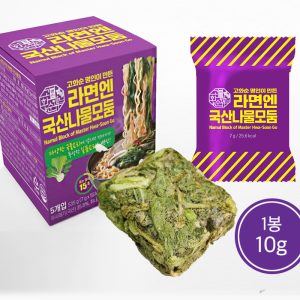
Korean temple cuisine is one of the more interesting niches. CJ CheilJedang has piloted a small range of products that reflect the centuries‑old plant‑based cooking tradition of Buddhist monasteries. Because Korean temple cuisine originated in Korea, it carries a unique cultural cachet that’s catching on in European and North American health‑food markets. Not every buyer knows about this yet — but the early adopters are building loyal customer bases.
Now, where CJ CheilJedang owns Bibigo, other giants like Nongshim and Samyang Foods focus on instant noodles and snacks. Chapagetti and Honey Butter Chip are both produced by Nongshim, and Buldak Bokkeum Myeon is produced by Samyang Foods. If your market demands these cult favorites alongside Bibigo’s dumplings, you’ll need separate supplier relationships. However, starting with CJ gives you the widest culinary range — from traditional Korean temple cuisine to globally recognized ready meals.
What certifications and compliance standards does CJ meet for export?
CJ CheilJedang’s export products come backed by a full suite of international certifications, including HACCP, ISO 22000, Global Food Safety Initiative (GFSI) recognition, and halal certification for applicable lines — all of which are filterable in the buyer portal. Yoo Beop‑min, deputy head of the Export Plus Task Force, recently confirmed that the Korean government is accelerating the issuance of global compliance certificates to support exporters, with a target of 200 new halal‑certified product codes by mid‑2026.
That government push — led by the Ministry of Trade, Industry and Resources and the Korean Agency for Technology and Standards — directly benefits CJ’s program. So if you’re importing into a Muslim‑majority market or a country with strict food‑safety regimes (EU, GCC, US FDA), CJ can often provide the required documentation faster than smaller exporters.
Ottogi, another major Korean food manufacturer, also holds many of the same certifications, but CJ’s scale often means shorter lead times for certificate renewal. Still, if you’re importing Ottogi’s curry or ketchup lines for a diverse Korean food aisle, you’ll find their compliance process similarly strong — it’s just a separate portal.
What are the logistics and shipping terms (FOB, CIF) for CJ orders?
CJ CheilJedang typically offers both FOB (Free On Board) and CIF (Cost, Insurance, Freight) terms, allowing you to choose whether you want CJ to manage ocean freight or handle it yourself through your own forwarder. According to the Korea Agro‑fisheries and Food Trade Corp, which supports exporters like CJ through its 12 overseas offices, most bulk buyers with established logistics networks prefer FOB to control shipping costs.
If you’re new to international food logistics, CIF can be less stressful: CJ books the vessel, covers insurance, and delivers the container to your designated port. The flip side? You lose some visibility on shipping costs and transit routing.
Here’s the thing about MOQs: they vary wildly by product category. A frozen dumpling SKU might have a minimum of one 20‑ft container, while dry noodles could be as low as 5 pallets. The CJ portal shows real‑time MOQ per SKU after login, so you can mix pallets within the same temperature class to fill a container.
One more thing: export documentation. CJ provides the commercial invoice, packing list, and certificate of origin. You’re responsible for import customs clearance in your market. If your country requires a phytosanitary certificate for certain agricultural products (like dried vegetables in Korean temple cuisine meals), confirm with CJ’s quality team that they can issue one before you place the order.
What are the biggest mistakes international buyers make when applying to CJ?
Applications often stall on a few avoidable mistakes.
1. Not verifying document apostillation. Your import licence might be perfectly valid, but if it’s not apostilled or consular‑legalized, CJ’s compliance team will flag it.
2. Overpromising on volume. Inflating your projected purchase volume to look big‑league can backfire during credit assessment. Be honest — CJ values consistency over a single giant order.
3. Ignoring product‑specific export restrictions. Not every Bibigo product can ship to every country. Some frozen items are limited by cold‑chain infrastructure on the receiving end. Always check the “Export‑Ready” badge next to the SKU.
4. Forgetting the introductory video. The buyer profile video is mandatory, not optional. Record a simple clip; it’s better than a missing file that kills your application.
What do industry experts say about succeeding with CJ’s export programs?
“The direct export program through CJcatalog.co.kr is the fastest way for international buyers to access authentic Korean food — but many applicants overlook the required buyer profile documentation and end up with delayed approvals. Treat the portal like a partnership onboarding, not a simple sign‑up form.”
Peláez’s point hits home: the approval process isn’t just an admin hurdle — it’s CJ’s way of qualifying serious trade partners. And with more than 40 countries already in their distribution network, they can afford to be selective.
Start with a focused product mix rather than trying to import everything. Pick one temperature class and build volume there. CJ rewards consistency.
“Ingredient concentration matters more than ingredient count. A well-formulated product with three actives outperforms ten mediocre ones”
Frequently Asked Questions
Can I order mixed pallets of different CJ brands?
Yes. CJ’s direct export program supports mixed containers within the same temperature class — for example, combining Bibigo frozen dumplings, bulgogi, and temple cuisine items in one reefer container. You request a multi‑SKU quote directly through the portal.
What are the minimum order quantities for CJ direct export?
MOQs range from 5 pallets to a full 20‑ft container depending on the product category. Frozen goods generally require a full reefer container, while dry noodles and sauces can ship in smaller volumes. Exact MOQs appear on each SKU listing after login.
Does CJ provide halal‑certified products for Muslim markets?
Absolutely. Many Bibigo and CJ branded products carry halal certification. According to Yoo Beop‑min of the Export Plus Task Force, the Korean government is expanding halal certification to over 200 product codes by mid‑2026. Filter the catalog by “halal” to see eligible SKUs.
How long does the buyer approval process take?
As of 2026, most buyers receive a decision within 1–3 weeks, provided all documents are in order and the introductory video is submitted. Missing or incorrectly formatted documents are the main reason for delays.
Can I source Korean temple cuisine products through CJ?
Yes, CJ CheilJedang has piloted a small but growing line of Korean temple cuisine items — plant‑based dishes inspired by monastic traditions. These are listed under the Bibigo brand and can be quoted alongside other frozen or ambient SKUs.
Last updated: May 14, 2026