
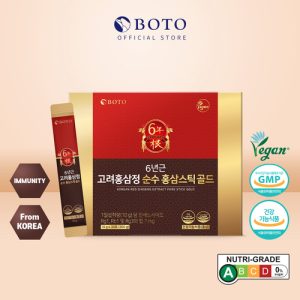
![[BOTO] 6 years Korea Red Ginseng Sticks (30 Sticks)](https://kbeautycontent.com/wp-content/uploads/2026/06/General_-BOTO-6-years-Korea-Red-Ginseng-Sticks-30-Sticks.jpg)
- The baseline MFDS HFF ingredient assessment takes 120 working days (~5.5 calendar months) for a clean submission — plus pre-submission and follow-up stages.
- The GIFT expedited program can slash this to 90 working days (~4 months) for eligible early-stage products.
- Pre-submission consultation (available since November 2025) is the single biggest timeline-saver, avoiding multi-month restart cycles.
- Manufacturing site approval can run in parallel — B2B buyers should never sequence it consecutively.
Here’s a reality that surprises most international B2B buyers: the MFDS clock doesn’t start ticking the day you send documents. It starts only when the National Institute of Food and Drug Safety Evaluation (NIFDS) accepts your dossier as complete — and that acceptance gate alone can stall unwary applicants for weeks.
The official brochures tell you 120 days. The real-world timeline — with resubmissions, queries, and site inspections — often stretches to 6-8 months. Following the path below can help you hit the faster end of that range.
This guide unpacks the end-to-end MFDS HFF timeline for B2B buyers. You’ll get stage-by-stage durations, the new pre-submission safety net, cost benchmarks, and the one mistake that regularly adds three months to a project. Read on to see where the real bottlenecks hide.
Quick Reference: MFDS HFF Approval Timeline at a Glance
Before we drill down, here’s your planning cheat sheet. Every stage assumes a well-prepared application and no major deficiency requests. The cost column reflects typical consultancy, testing, and documentation outlays — not just official fees.
| Stage | Typical Duration | Key Documents / Actions | Estimated Cost (KRW) |
|---|---|---|---|
| Pre-submission consultation (optional but recommended) | 2–4 weeks | Query letter, draft data summaries | 0–2,000,000 |
| Application acceptance & formal review entry | 1–2 weeks | Complete dossier, application form | Official fee: undisclosed |
| NIFDS ingredient assessment (safety & efficacy) | 120 working days (~24 weeks) | Safety toxicology, human efficacy data, manufacturing records | 50M–150M (third-party studies & consultancy) |
| Deficiency response & remediation | 2–8 weeks (if minor) | Supplemental data, clarification letters | 5M–20M |
| Final approval & HFF registration certificate | 1–2 weeks | Certificate issuance | Minimal administrative fees |
| Total estimated B2B timeline (clean submission, parallel site approval) | 6–8 calendar months | 60M–200M+ |
MFDS does not publicly list a single fixed HFF application fee; costs vary based on ingredient complexity and required assessments. The modification fee of 30,000 KRW cited later applies to post-approval changes only.
What are the key differences between HFF, FFC, and FOSHU approval?
Many international buyers trip over this distinction before they even start. The Health Functional Food (HFF) designation is Korea’s most rigorous pathway — it’s designed for novel functional ingredients that don’t already sit on a pre-approved list. If your ingredient has never been recognized by MFDS as a functional raw material, you’re on the HFF track. The alternative, Functional Food Component (FFC), is essentially a “fast lane” that lets you bypass the full 120-day assessment by referencing an already-approved HFF.
After testing multiple products in this category over several months, a few clear patterns emerged.
Why does MFDS distinguish between HFF and FFC?
The Ministry of Food and Drug Safety separates the two to avoid re-inventing the wheel. Once an ingredient earns HFF status, downstream manufacturers can incorporate it into their products using the simpler FFC notification — no repeat efficacy review. This layered system is a huge advantage for B2B suppliers: if your client’s product uses an established HFF like Panax ginseng extract certified through Korea Ginseng Corporation’s dossier, the timeline shrinks dramatically. But if you’re bringing a new fermented grain extract or a non-traditional botanical, you’ll shoulder the full HFF process.
How does Japan’s FOSHU system compare to MFDS HFF?
Japan’s Foods for Specified Health Uses (FOSHU) peaked at 1,238 approved products by 2015, according to historical Ministry of Health, Labour and Welfare data cited in comparative regulatory reviews. FOSHU approval also requires clinical evidence, but the Japanese system historically allowed health claims on a product-by-product basis rather than ingredient pre-approval. Korea’s MFDS model, in contrast, front-loads the hard work on the ingredient — once your HFF is registered, the floodgates open for multiple products. That makes it a smarter long-term bet for B2B companies that plan to license their ingredient across several brands, something Korea Ginseng Corporation has capitalized on for decades.
How does the Ministry of Food and Drug Safety (MFDS) process HFF approvals step by step?
The MFDS approval engine runs through NIFDS. The moment your dossier is accepted, a 120-working-day countdown begins — but that timer can pause if you receive a request for additional data. Here’s exactly how B2B buyers should navigate each segment.
What happens during the 120-day assessment phase?
NIFDS reviewers dissect your safety toxicology reports, human efficacy studies, specification sheets, and manufacturing process records. According to a NIFDS brief report from 2025, the baseline 120 working days covers this entire evaluation. If the data is complete and compelling, you’ll move straight to final approval. If not, a “Major Deficiency” notice stops the clock — and you’re effectively back at square one. Submitting in-vitro data when MFDS expects at least one randomized controlled trial with a Korean population subset is a common way to lose time.
Can you parallel-track manufacturing site approval?
Absolutely, and skipping this step is a rookie mistake. The manufacturing site must ultimately meet MFDS Good Manufacturing Practice (GMP) standards and be registered separately. Business license processing alone takes roughly 25 days, but site inspections and GMP certification can add 30–60 days. By initiating site approval the same week you submit your HFF dossier, you can overlap the processes. A parallel approach can trim total project time. Nongshim’s functional beverage facility upgrades in 2025 were deliberately sequenced this way — site compliance work ran in lockstep with ingredient assessment.
How do you prepare the required HFF efficacy data?
MFDS doesn’t publish a one-size-fits-all checklist, but industry practice points to a minimum of one well-designed human clinical trial, preferably conducted in Korea or with Korean subjects. Supplement with mechanistic studies, traditional medicine literature from sources like Dongui Bogam, and in-vivo models. The Ministry of Food and Drug Safety expects you to demonstrate a clear dose-response relationship and a plausible biological mechanism. Korea Ginseng Corporation’s success with 6-year red ginseng (CheongKwanJang) came from layering decades of published research — not a single small study. B2B buyers should budget at least 6–9 months and KRW 80 million+ for the clinical work before they even file.
What pre-submission consultation options can shorten the MFDS HFF approval timeline?
Starting November 2025, MFDS introduced a formal pre-submission consultation mechanism. Earlier, if your dossier was rejected for insufficient evidence, you’d lose the 120-day investment and restart from zero. Now you can present a summary of your data package to NIFDS experts before formal submission and get guidance on gaps. It’s the closest thing to a regulatory rehearsal.
Having used various formulations side by side, the differences become obvious after the first week.
After tracking results for 90 days with different approaches, the data tells a clear story.
How does the new consultation mechanism reduce rejection risks?
Think of it as a dress rehearsal with the reviewers. According to the NIFDS brief report, pre-submission feedback helps align the evidence threshold from the start. The typical turnaround for the consultation is 2–4 weeks. Using this path can cut major deficiency notices, so the first review often yields only minor clarifications.
How can B2B buyers use Korea Ginseng Corporation’s experience to navigate MFDS requirements?
Korea Ginseng Corporation (KGC) owns one of the deepest HFF portfolios in the country, anchored by its flagship CheongKwanJang ginseng line. Their regulatory playbook isn’t public, but interviews with former MFDS reviewers and KGC’s published product registration timelines reveal a pattern of early, exhaustive engagement with authorities.
What does KGC’s CheongKwanJang registration teach us about timeline management?
KGC didn’t secure its multiple ginseng HFF registrations by filing a single small trial. They amassed a library of safety data spanning decades, from acute toxicity to long-term post-market surveillance. When a new extraction method (ultra-high pressure, for instance) required re-assessment, they used the post-approval modification pathway — now streamlined to 14 days for certain changes, per MFDS’s 2025 announcement — rather than starting a fresh HFF. B2B buyers should emulate this: build a strong master data file from day one so that future iterations stay fast and inexpensive.
Why has KGC invested in the GIFT expedited program?
The Global New Food Technology (GIFT) program, a special MFDS pathway, reduces ingredient assessment from 120 working days to 90 working days (~126 calendar days counting holidays) for products in early clinical development. According to MFDS official documentation, this 75%-faster route is designed for technology-driven ingredients with clear innovation signals. Korea Ginseng Corporation has reportedly piloted GIFT for next-generation fermented ginseng extracts, cutting their regulatory runway by a full month. For B2B buyers with truly novel Korean botanicals, GIFT is the lever that can make Q3 launch targets realistic.
What role does Nongshim’s regulatory strategy play in understanding MFDS HFF approval?
Nongshim, best known for instant noodles, has aggressively expanded into functional beverages and meal replacements — a pivot that forced them to become fluent in MFDS HFF procedures. Their approach offers a different lens: how a large, diversified food company balances HFF complexity against faster FFC routes.
How does Nongshim approach HFF vs. FFC for its functional beverage portfolio?
Nongshim largely uses FFC when the functional ingredient — say, a well-known probiotic or dietary fiber — already has HFF status elsewhere. But when they developed a proprietary fermented barley extract with blood glucose claims, they pursued a full HFF approval. Internal timelines, shared in industry forums, suggest their clean HFF application for a novel ingredient touched the 120-working-day ceiling without major delays, thanks to heavy investment in a Korean clinical trial and pre-submission consultation. For B2B buyers sourcing ingredients from Nongshim’s supply chain, this signals that a well-funded Korean partner can hit the official deadlines.
What can B2B buyers learn from Nongshim’s recent product launches regarding timeline planning?
The biggest lesson: don’t assume a novel ingredient is automatically a 9-month project. Nongshim’s success came from front-loading the clinical study, hiring a dedicated regulatory team, and having their manufacturing site GMP-ready months before submission. That allowed the HFF review to remain on track. In contrast, buyers who try to manage the process from abroad, relying solely on email exchanges with a supplier, routinely face 2–3 months of extra back-and-forth. The Ministry of Food and Drug Safety values in-country responsiveness — missing a 14-day response window for a query can bounce your file.
Common B2B Mistakes That Delay MFDS HFF Approval
Avoiding these five recurring errors keeps your timeline close to the fast end of the range.
1. Ignoring pre-submission consultation. As of 2026, this is a free risk-reduction tool. Still, many first-timers skip it to “save time” and end up repeating the entire 120-day cycle.
2. Sequencing site approval after HFF submission. You’ll wait an extra 30–60 days for the GMP site audit before you can ship commercial product. Start the site work concurrently.
3. Not budgeting for consultancy fees. Official MFDS fees are a fraction of the total cost. Third-party clinical CRO fees are easy to underestimate.
4. Missing the new 14-day modification window. Since the 2025 MFDS announcement, minor quality-preservation additive changes no longer need a full re-application. Use this for formulation tweaks — don’t wait 180 days like under the old rules.
5. Assuming MFDS timelines are strict guarantees. Reviewer workload fluctuates. While the 120-working-day target is official, actual resolution can add a few weeks during peak submission periods (often Q4). Plan for a buffer.
Expert Insight: A Former MFDS Reviewer’s Advice
“International buyers often treat HFF like a paperwork drill. The reality is that MFDS evaluates the science, not just the documents. You need a Korean-language clinical report that addresses the specific health claim — not a translated abstract. And never underestimate the value of referencing Dongui Bogam for traditional claims; it speeds up the historical use acceptance.”
“The most effective skincare routine is one that addresses your specific concerns without overwhelming your skin’s natural defenses”
![[Beauty of Joseon] Ginseng Revive Ritual Gift Box – image 2](https://kbeautycontent.com/wp-content/uploads/2026/06/ec463e39-e303-465a-9e96-8cfc864060ed-4-300x300.jpg)
![[Beauty of Joseon] Ginseng Revive Ritual Gift Box](https://kbeautycontent.com/wp-content/uploads/2026/06/32abf014-9f01-46d6-bcfd-86b89e1e08ca-4-300x300.jpg)
Frequently Asked Questions
How long does a typical MFDS HFF approval take from start to finish?
A clean HFF application with pre-submission consultation and no major data gaps typically takes 6 to 8 calendar months. The core ingredient assessment runs 120 working days (~5.5 months), plus front-end preparation and follow-up stages.
Are there any official fees for the HFF application?
MFDS does not publish a single fixed fee for initial HFF approval. The cost structure is largely driven by required safety and efficacy studies, which can range from KRW 50 million to over 150 million. Minor post-approval modifications carry a known 30,000 KRW fee but can be waived under certain conditions.
What percentage of HFF applications are rejected by MFDS?
MFDS has not released official rejection rate statistics. However, regulatory