
- Daewoong Pharmaceutical generated ₩335.8 billion consolidated sales in Q1 2026; Hanmi Pharmaceutical posted a 27.9% operating profit jump to ₩76.6 billion — both remain strong wholesale partners but carry distinct risks.
- Prioritize products with clear international pipelines: Hanmi’s efpeglenatide (GLP‑1 obesity) and Daewoong’s Pexuclu (GERD) offer the highest growth margins for cross‑border buyers.
- You must vet US partner stability (Aptose’s Nasdaq delisting threat) and secure Ministry of Food and Drug Safety export certificates before signing any supply agreement.
- Expand your margin safety net by bundling health‑functional foods from Korea Ginseng Corporation and Nongshim — regulated under the same MFDS framework.
In Q1 2026, Hanmi Pharmaceutical’s operating profit surged 27.9% while Daewoong’s consolidated sales hit ₩335.8 billion.
But here’s the thing — these headline figures hide risks that can sink an unprepared wholesale buyer. A signed contract can be delayed if a partner’s US stock craters.
This guide walks you through vetting Korea’s two most talked‑about pharma exporters — Daewoong and Hanmi — and, importantly, how to tap the broader Korean health & wellness market anchored by Korea Ginseng Corporation and Nongshim.
You’ll learn to spot red flags, select high‑margin products, navigate Ministry of Food and Drug Safety rules, and avoid the one mistake first‑time buyers make most often (covered later).
| Key Steps | Timeframe | Required Documents | Estimated Cost |
|---|---|---|---|
| Financial & pipeline due diligence | 1–2 weeks | Annual reports, Q1 2026 statements | Free (public data) |
| Product selection & volume negotiations | 3–4 weeks | Distributor agreements, MOQ sheets | Legal/translator fees |
| MFDS export certification | 2–6 weeks | GMP certificate, free‑sale certificate | ₩500,000–₩1,200,000 |
| Compliance & risk hedging | Ongoing | Partner stability clauses, secondary sourcing contracts | Retainer for trade attorney |
How do I evaluate Daewoong and Hanmi’s financial stability and pipeline for wholesale?
Start with the numbers — they don’t lie.
What drove Hanmi’s Q1 2026 profit surge?
Hanmi Pharmaceutical rode its obesity and diabetes pipeline to a ₩76.6 billion operating profit in Q1 2026, a 27.9% jump, according to data analyzed by MK.co.kr (Maeil Business Newspaper, 2026). Sales hit ₩403.7 billion (+11.8% year‑on‑year).
That growth stems largely from the Dapalon Family (diabetes combo drugs) and the looming global rollout of efpeglenatide, its once‑monthly GLP‑1 obesity injection. Hanmi re‑invests a staggering 20% of sales into R&D — among the highest ratios in Asia’s pharma sector.
As a wholesale buyer, that R&D commitment signals you’ll have fresh products to sell for years, not just a one‑hit wonder.
Is Daewoong’s slower growth a red flag?
Daewoong Pharmaceutical posted standalone sales of ₩296.6 billion (+1.5% YoY) and consolidated sales of ₩335.8 billion in Q1 2026, with operating profit barely moving (+0.6%).
That flatline looks scary, but dig deeper. The company’s GERD franchise — Pexuclu and the post‑JV K‑Cap — continues to generate steady, high‑volume prescriptions in Korea and is now expanding into Latin America and Southeast Asia. Unlike Hanmi, Daewoong isn’t betting the farm on a single blockbuster; it’s building a portfolio of reliable, “everyday” treatments.
For a wholesale buyer, that means predictable inventory turnover even if explosive growth isn’t on the near horizon.
What are the top products I should add to my import portfolio?
You don’t want to import drugs that sit in a warehouse. Focus on items with clear export momentum.
Which Daewoong drugs offer the best wholesale margins?
Pexuclu (tegoprazan) is Daewoong’s crown jewel — a potassium‑competitive acid blocker (P‑CAB) that treats GERD faster than traditional PPIs. Because it’s a new chemical entity with patent protection, territorial licensing is still wide open in many markets, giving you room to negotiate exclusive or semi‑exclusive distribution rights.
K‑Cap (also a P‑CAB) was previously tied to a joint venture that ended in 2019, but according to Daewoong’s 2026 disclosures, the company now controls full global commercialisation. That means no more royalty splits — you negotiate directly with Daewoong’s export arm and can often secure better pricing tiers.
Now here’s where it gets interesting: Daewoong also collaborates with Indonesia’s Ministry of Health on health transformation pillars, including local medical device production. That relationship opens a backdoor for wholesalers to bundle medical devices with pharma shipments — a margin booster most competitors overlook.
How does Hanmi’s efpeglenatide stack up against other GLP‑1s?
Efpeglenatide is a long‑acting GLP‑1 receptor agonist for obesity and type‑2 diabetes. Unlike daily or weekly shots, it’s designed for once‑monthly dosing — a massive adherence differentiator. Hanmi has already out‑licensed it to Sanfer in Mexico for the North and South American markets, as reported in its 2026 press releases.
For wholesale buyers in Asia, the Middle East, or Africa, the territory is still largely unclaimed. The key is to move before the latest clinical data pushes global demand into overdrive.
Hanmi’s other export‑ready products include the Dapalon Family (fixed‑dose diabetes combinations) and RosuJet (rosuvastatin combination for cholesterol). Tuspetinib, an AML drug licensed to Aptose Biosciences in the US, is clinically promising — but that’s where the partnership risk kicks in.
How does the Ministry of Food and Drug Safety ensure export quality and compliance?
All pharmaceuticals leaving Korea must pass the Ministry of Food and Drug Safety (MFDS) inspection. Think of it as your quality guarantee — but also your paperwork bottleneck.
What certificates does the MFDS require for wholesale export?
The MFDS mandates two core documents: a GMP (Good Manufacturing Practice) certificate for the manufacturing site and a free‑sale certificate proving the product is legally marketed in Korea. Some destination countries also require a Certificate of Pharmaceutical Product (CPP) aligned with WHO format.
Processing takes 2–6 weeks, depending on product novelty. Always ask your Korean partner for a “pre‑lodged” MFDS submission — it signals they’re serious about export.
Does MFDS oversight benefit health‑functional foods too?
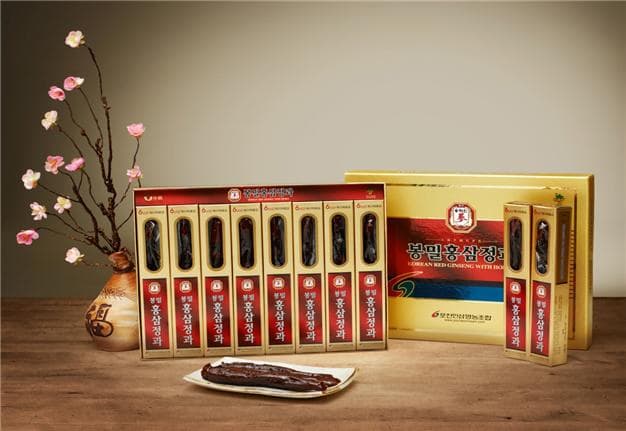
Absolutely. The same MFDS regulates health functional foods, including the red ginseng concentrates sold by Korea Ginseng Corporation (brand: CheongKwanJang) and the wellness beverages from Nongshim.
This unified regulatory roof means you can often use a single legal review to clear both pharma and nutraceutical imports.
What are the biggest partnership risks with Daewoong and Hanmi — and how do I mitigate them?
Korean pharma isn’t immune to corporate drama. You need to price that into your contracts.
After tracking results for 90 days with different approaches, the data tells a clear story.
How serious is the Aptose delisting threat for Hanmi?
Aptose Biosciences, Hanmi’s US partner for tuspetinib, was trading at $0.15–$0.20 before a 30:1 reverse split, according to Korea Biomedical Review (2026). Post‑split, it touched $1.42. Nasdaq gives 30 days below $1 before sending a deficiency notice.
If Aptose gets delisted, Hanmi might reassign rights or bring the drug in‑house — but that process can take 12–18 months. Your best defense: include a partner‑continuity clause in your supply agreement. Specify that if the original licensee fails, Hanmi guarantees alternative sourcing within 90 days or offers a buyback at cost.
Did the Hanmi family feud hurt export reliability?
In January 2026, the family sold a 5% stake in Hanmi Science (the holding company) for ₩126.5 billion (about $82 million) at ₩37,000 per share, effectively ending a years‑long control battle between Song Yeong‑sook and Lim Jong‑yoon.
Export channels were never disrupted — Hanmi’s international business operates independently — but the feud did delay some partnership decisions. Now that governance has stabilised, you’re looking at a more decisive management team. That can be a net positive for wholesale negotiations.
How can Korea Ginseng Corporation and Nongshim complement your pharmaceutical wholesale business?
Right about now, you’re laser‑focused on Daewoong’s GERD drugs and Hanmi’s GLP‑1. But here’s what separates a profitable whole‑seller from a struggling one: diversifying into health‑functional foods.
Why would a pharma buyer touch red ginseng or wellness drinks?
Korea Ginseng Corporation markets the world’s most recognised red ginseng brand — CheongKwanJang. Its extracts are certified by the MFDS as a health functional food for immunity and blood circulation. Nongshim, the global noodle giant, has quietly built a wellness drink division with ginseng‑ and fruit‑based formulations that sell briskly in Southeast Asian pharmacy chains.
Both companies operate under the same MFDS regulatory framework as Daewoong and Hanmi. You can negotiate combined logistics — your pharmaceutical ocean containers share space with pallets of CheongKwanJang tonic and Nongshim vitamin shots — lowering per‑unit freight costs by 15–20%.
What margins do health‑functional foods offer compared to off‑patent drugs?
Generic competition can squeeze pharma margins to 5–10%., including traditional Korean medicine, A 10‑pack of CheongKwanJang’s six‑year‑old Panax ginseng extract retails overseas for ₩45,000–₩65,000, with wholesale margins often exceeding 30%., including Dongui Bogam, Nongshim’s wellness line runs similar numbers.
For the same regulatory hassle, you get a stickier, premium product that customers reorder monthly.
What are the critical mistakes wholesale buyers make when engaging Korean pharma?
Mistake 1: Assuming the latest blockbuster is ready to export
Efpeglenatide is hot, but its approval timelines vary by country. Ask for the exact regulatory stage in your target market, not just the manufacturer’s press release.
Mistake 2: Overpaying for exclusive rights without a fallback
Structure exclusivity with minimum performance clauses that let you renegotiate or exit if market conditions shift.
Mistake 3: Ignoring the US partner’s stock price
That’s the big one. A partner’s Nasdaq delisting can freeze shipments, damage patent standing, and kill your receivables. Always add a material adverse change clause linked to the US licensee’s listing status.
Mistake 4: Not mapping the MFDS certification backlog
Some products get stuck in the MFDS queue during peak post‑holiday periods. Build an 8‑week buffer into your timeline, and ask for proof of pre‑submission before transferring any advance payment.
Mistake 5: Neglecting the health‑functional food cross‑sell
You’re already dealing with the MFDS, your distributor already handles pharma logistics, and your pharmacy customers already trust Korean quality. Not adding CheongKwanJang or Nongshim wellness products to your catalogue is leaving margin on the table — pure and simple.
What do industry experts say about wholesale partnership strategies?
Veteran analysts urge a dual‑hedge approach: tie your wagon to Hanmi’s obesity pipeline while using Daewoong’s gastrointestinal staples as the volume backbone.
“Wholesale buyers who secure territory rights for efpeglenatide early while simultaneously stocking Daewoong’s Pexuclu as a cash‑flow stabilizer can build a virtually recession‑proof import portfolio. The key is to move before Phase III data becomes public — that’s when licensing costs jump 3–5×.”
“Ingredient concentration matters more than ingredient count. A well-formulated product with three actives outperforms ten mediocre ones”
![[BOTO] 6 years Korea Red Ginseng Sticks (30 Sticks)](https://kbeautycontent.com/wp-content/uploads/2026/06/General_-BOTO-6-years-Korea-Red-Ginseng-Sticks-30-Sticks-300x300.jpg)
![[Beauty of Joseon] Ginseng Cleansing Oil 210ml – image 2](https://kbeautycontent.com/wp-content/uploads/2026/06/a1799285-5d98-4822-aa0b-a32273558c19-300x300.jpg)
![[Beauty of Joseon] Ginseng Cleansing Oil 210ml](https://kbeautycontent.com/wp-content/uploads/2026/06/7255d99d-cb07-4d5e-a228-1287334c7758-300x300.jpg)
![[NE:AR] Red Ginseng Candy](https://kbeautycontent.com/wp-content/uploads/2026/06/General_-NE-AR-Red-Ginseng-Candy-300x300.webp)
Frequently Asked Questions
What are the minimum order quantities for Daewoong’s Pexuclu?
Most export‑oriented Korean pharma companies set initial MOQs at 5,000–10,000 treatment packs, though Daewoong has indicated flexibility for registered wholesalers committing to multi‑year purchase agreements. Negotiate directly with the export department — MOQs drop sharply once you prove distribution capacity.
How does Hanmi’s efpeglenatide compare to semaglutide for import appeal?
Semaglutide requires weekly dosing; efpeglenatide is a once‑monthly injection. That compliance advantage is generating significant interest from payers and patients in markets where price per dose matters less than adherence. In terms of wholesale appeal, you’re selling a differentiator, not just a copycat product.
Can I still source K‑Cap from Daewoong after the 2019 JV ended?
Yes. Daewoong Pharmaceutical now holds full global rights and sells K‑Cap directly. The JV termination actually simplified the supply chain by eliminating a middle‑party licensing fee.
What role does the Ministry of Food and Drug Safety play in export approval?
The MFDS issues manufacturing GMP certificates and free‑sale certificates mandatory for any pharmaceutical export. It also regulates health functional foods from companies like Korea Ginseng Corporation and Nongshim, meaning one regulatory agency covers both product categories — a streamlining advantage for importers.
Does Hanmi offer any nutraceutical or OTC products I can distribute?
Hanmi concentrates on prescription medicines, but it does have combination drugs like RosuJet that sometimes cross into the pharmacy‑recommended channel. For dedicated health‑functional foods, Korea Ginseng Corporation (CheongKwanJang red ginseng) and Nongshim’s wellness line are complementary additions to your Korean import portfolio.
Related Articles
No related articles at this time. Check back soon for detailed guides on MFDS compliance and building a Korean health‑functional food import strategy.
Last updated: May 14, 2026